If you are standing at a petrol pump or looking at a dashboard warning light and asking, “whats my tyre pressure supposed to be?” you are asking one of the most important questions for vehicle safety. Correct tyre inflation is not just about avoiding a flat tyre; it is crucial for your car’s handling, fuel efficiency, and overall lifespan.
In this guide, we will move beyond the basics. We will help you locate your specific manufacturer recommendations, understand how to read them, and explain why “guessing” is never a good idea.
Many drivers make the mistake of looking at the sidewall of the tyre itself to find the pressure. Do not do this. The number stamped on the tyre is the maximum pressure the tyre can hold, not the recommended pressure for your specific vehicle.
To find the correct PSI (Pounds per Square Inch) for your car, look in these three locations:
1. The Owner’s Manual
This is the most reliable source. Your vehicle’s manual will have a detailed section on maintenance that lists the standard pressures for normal driving and heavy loads.
2. The Driver’s Side Door Jamb
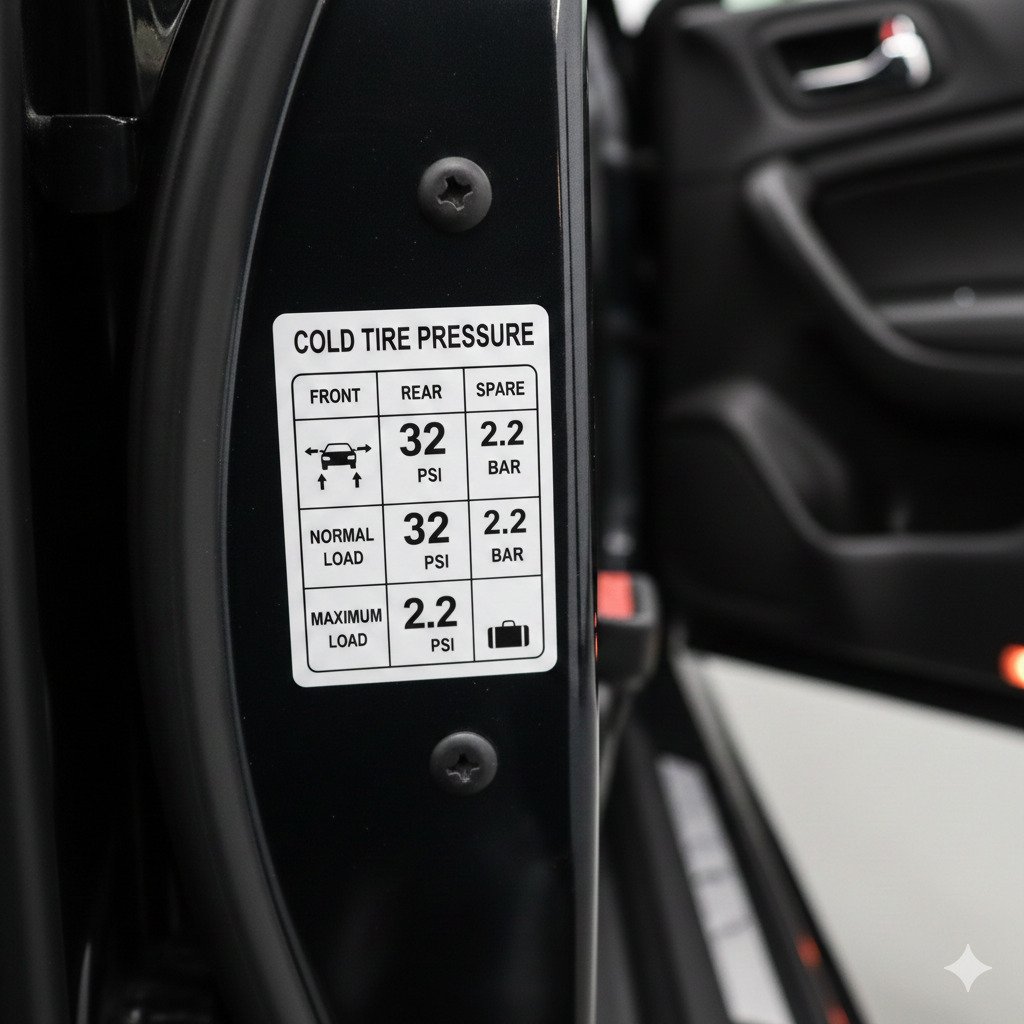
Open your driver’s door and look for a sticker (placard) on the frame. This usually displays a grid showing the recommended pressure for front and rear tyres.
3. Inside the Fuel Filler Flap
On some European cars, the pressure sticker is located on the inside of the fuel cap door.
Sticker inside driver door jamb displaying recommended tyre pressure PSI and Bar
How to Check Your Tyre Pressure Correctly
Once you know the target number (usually between 30 and 35 PSI for passenger cars), you need to measure it accurately.
Step-by-Step Guide:
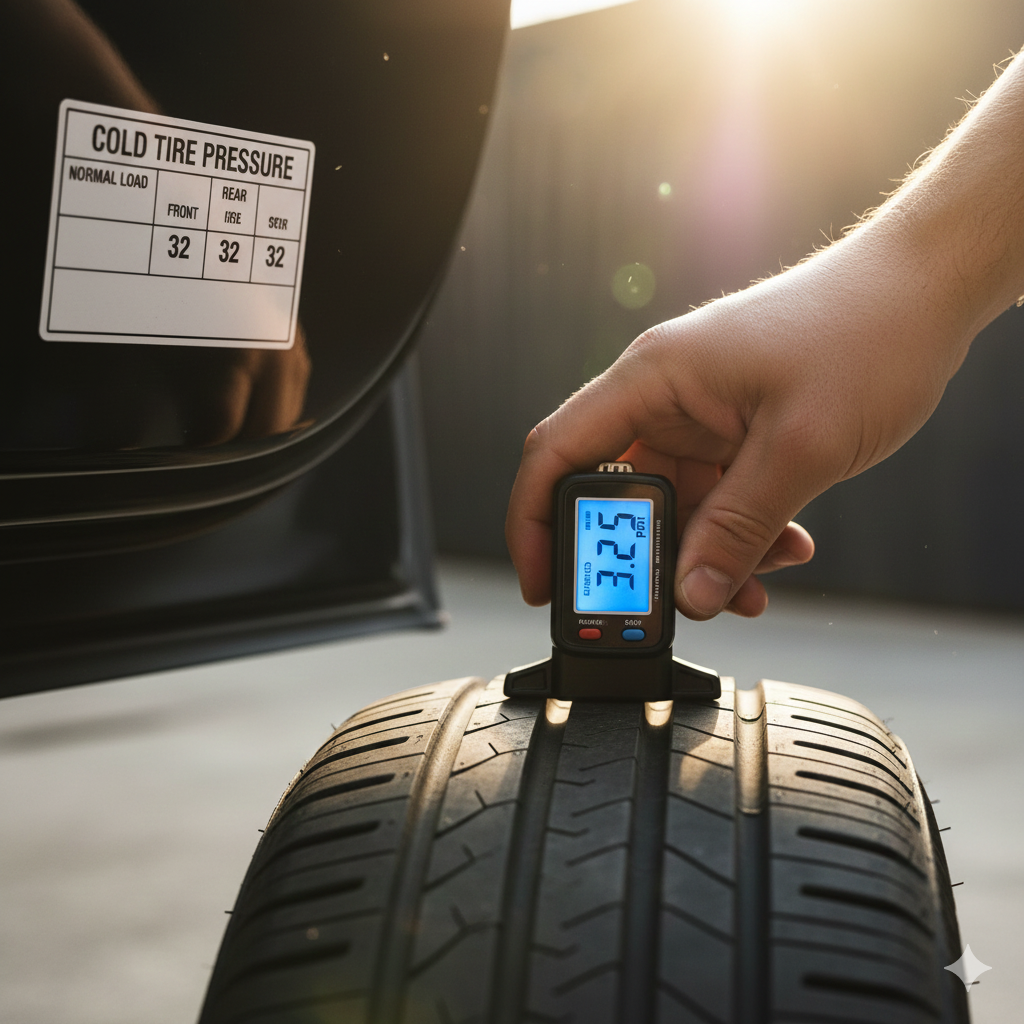
Check When Cold: Tyres heat up when you drive, which increases pressure. For an accurate reading, check them when the car has been parked for at least three hours.
Remove the Valve Cap: Unscrew the plastic cap on the air valve. Put it in your pocket so you don’t lose it!
Use a Gauge: Press a tyre gauge firmly onto the valve stem. You can use a digital gauge or the stick type found at gas stations.
Compare and Adjust: If the reading is lower than the recommendation on your door jamb, add air. If it is too high, release some air.
For professional advice on tyre maintenance or if you suspect a slow leak, it is best to consult experts at Siddhi Tyre to ensure your wheels are road-ready.
Why Tyre Pressure Matters
Maintaining the right pressure isn’t just about following rules; it impacts your wallet and your safety.
1. Safety and Handling
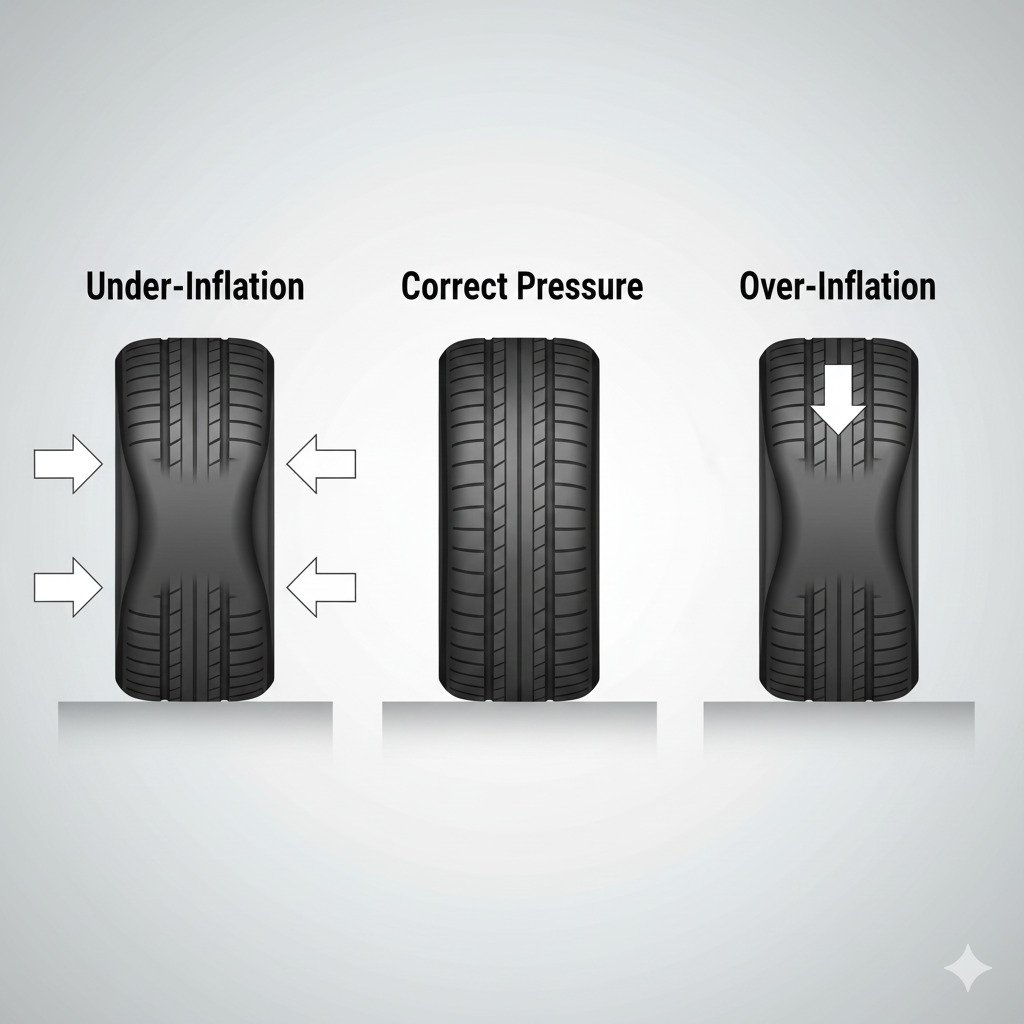
Under-inflated tyres flex more, causing heat build-up which can lead to a blowout. Over-inflated tyres have less contact with the road, leading to poor traction and longer braking distances.
2. Fuel Economy
According to major automotive studies, for every 1 PSI drop in pressure, your gas mileage can lower by 0.2%. If your tyres are significantly low, you are essentially burning money.
3. Tyre Lifespan
Under-inflation causes wear on the outer edges of the tyre.
Over-inflation causes wear on the center of the tread.
Diagram comparing tyre wear patterns caused by under-inflation, over-inflation, and correct pressure
Factors That Change Your Tyre Pressure
Even if your tyres have no punctures, they lose pressure over time naturally (permeation). However, environmental factors play a massive role.
The Temperature Effect
For every 10°F (approx 5.5°C) change in air temperature, tyre pressure will change by about 1 PSI.
In Winter: Pressure drops. Your light might turn on in the morning.
In Summer: Pressure increases.
Vehicle Load
If you are planning a road trip with four passengers and full luggage, your “normal” pressure might be too low. Check your manual for “Laden” vs. “Unladen” pressure settings.
FAQ: Common Questions About Tyre Pressure
Can I drive with the low tyre pressure light on?
It is not recommended. If the light is solid, one or more of your tyres is significantly under-inflated. If the light flashes, you may have a sensor malfunction.
Is 40 PSI too high?
For a standard sedan, 40 PSI is usually too high and will result in a harsh ride and center-tread wear. However, for large SUVs or trucks carrying a load, 40 PSI might be correct. Always refer to your placard.
How often should I check my pressure?
You should check your pressure once a month and before any long road trips.
Next time you wonder, “whats my tyre pressure?” remember to look at the sticker on your door jamb, not the sidewall of the tyre. Keeping your tyres properly inflated is the easiest and cheapest maintenance task you can perform to keep your car safe and fuel-efficient.
Don’t wait for a flat tyre to think about maintenance. If you need new tyres, alignment, or professional guidance, visit Siddhi Tyre today for premium service and support.
2 thoughts on “What’s My Tyre Pressure? How to Find and Maintain the Correct PSI 2025”