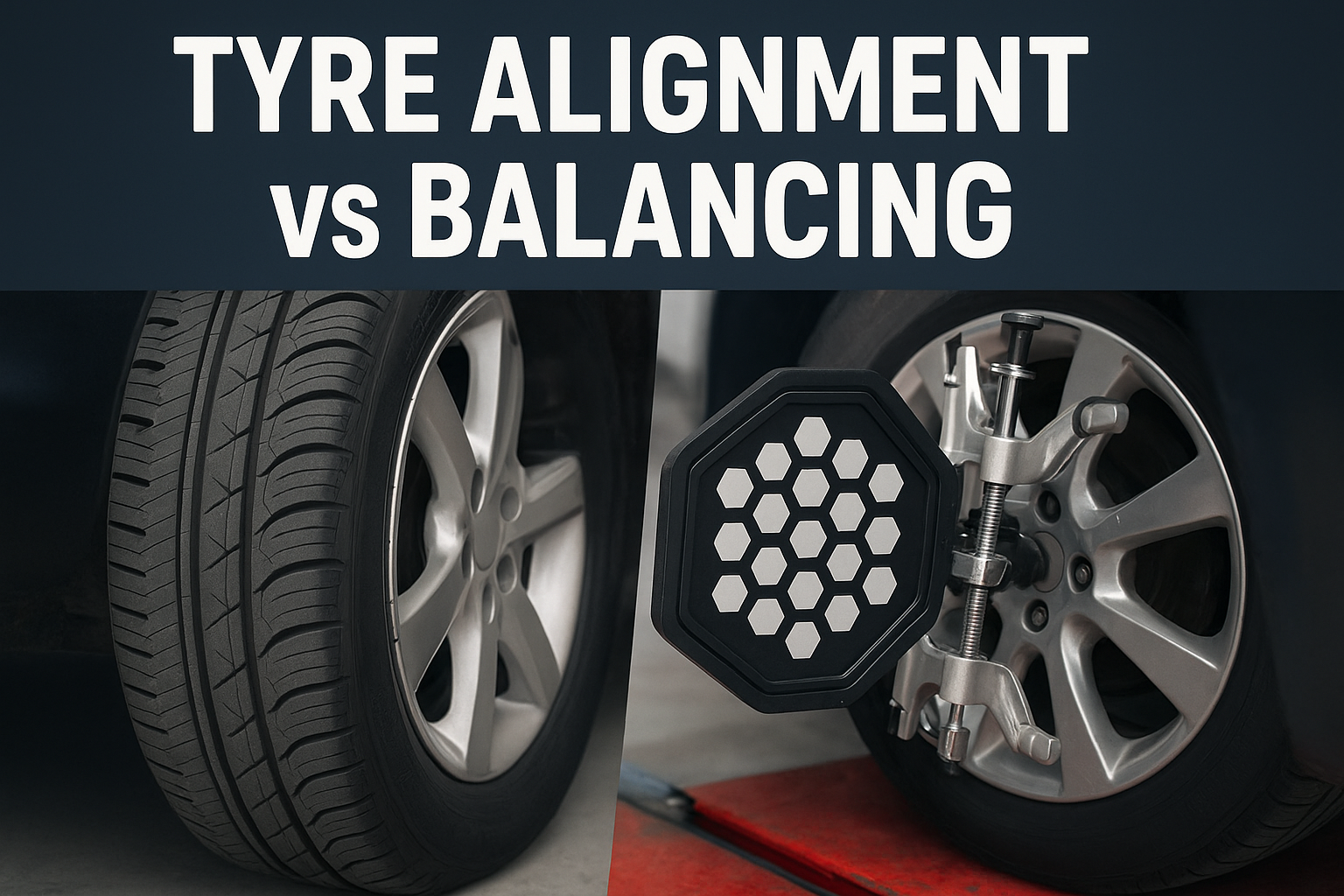
Car owners often hear mechanics talk about tyre alignment and tyre balancing, but many assume they are the same service. In reality, these two maintenance tasks address completely different issues, and both are crucial for your vehicle’s performance, safety, and tyre longevity. Let’s break down what each one means, how to spot the warning signs, and why both matter.
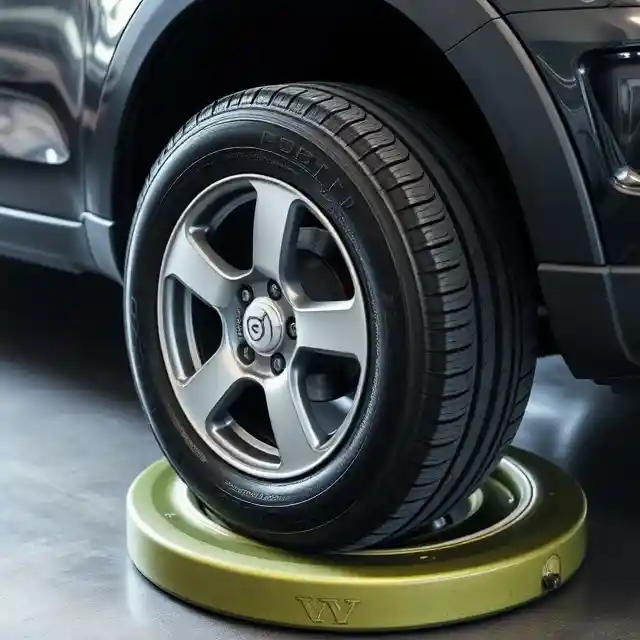
What is Tyre Alignment?
Tyre alignment, more accurately known as wheel alignment, involves adjusting the angles of your car’s wheels so that they meet the manufacturer’s specifications. Proper alignment ensures that the tyres sit correctly on the road, improving handling and reducing unnecessary wear.
Indicators of Poor Alignment:
- Your car drifts or pulls to one side, even when the steering wheel is straight.
- The steering wheel looks off-center while driving on a straight road.
- Tyres show uneven or accelerated wear patterns.
- You feel a lack of stability at higher speeds.
Why Alignment Matters:
- Extends tyre lifespan by preventing uneven wear.
- Improves fuel economy since misaligned tyres create rolling resistance.
- Enhances vehicle control and handling.
- Reduces strain on steering and suspension components.
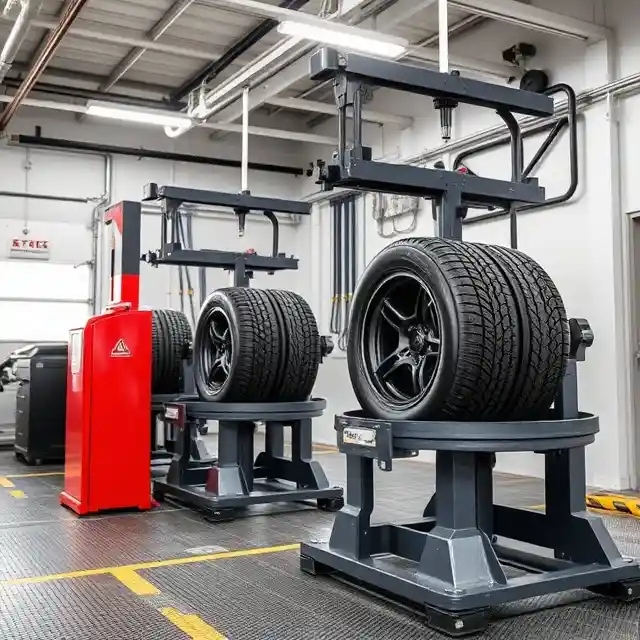
What is Tyre Balancing?
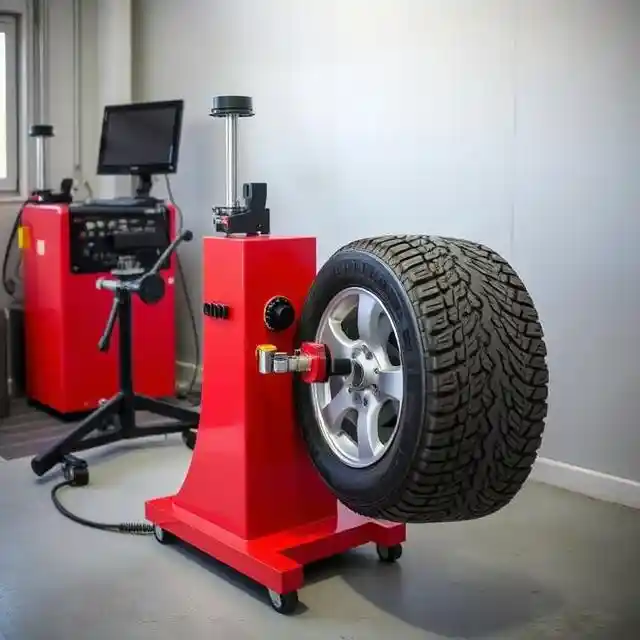
Tyre balancing focuses on the distribution of weight around the tyre and wheel assembly. Even small imbalances can cause vibrations that affect driving comfort and lead to premature wear of tyres and suspension parts. To correct this, technicians use precision machines to detect imbalances and attach small weights to the wheel.
Signs of Imbalance:
- Vibrations in the steering wheel, floor, or seats (especially at certain speeds).
- Tyres wear unevenly across the tread.
- Increased road noise or humming from tyres.
- Recent tyre installation without balancing.
Why Balancing is Essential:
- Ensures a smoother, more comfortable ride.
- Prevents premature tyre damage.
- Protects suspension and steering from unnecessary stress.
- Improves overall safety and driving experience.
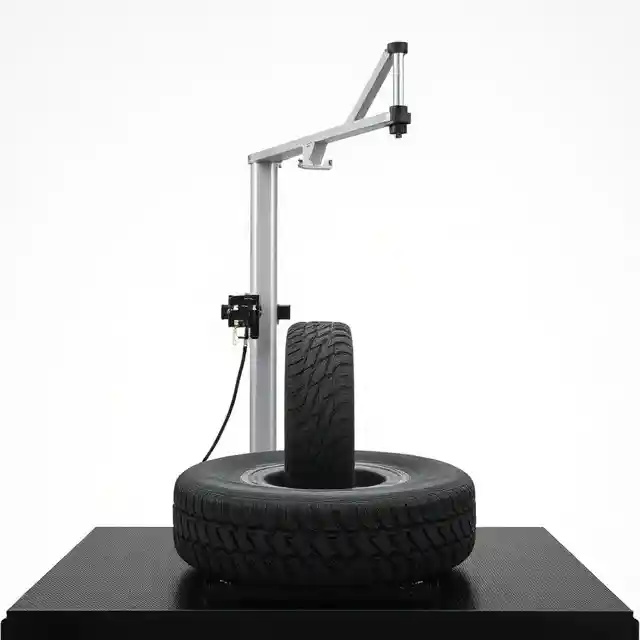
Alignment vs Balancing: The Core Differences
| Aspect | Tyre Alignment | Tyre Balancing |
|---|---|---|
| Purpose | Adjusts wheel angles to factory specs | Corrects uneven weight distribution |
| Main Symptoms | Pulling, drifting, uneven wear | Vibrations, noise, uneven tread wear |
| Performed When | After hitting potholes, curb impacts, or noticing drift | After tyre installation, rotation, or vibration issues |
| Key Benefit | Better handling and tyre longevity | Smoother ride and improved comfort |
Do You Need Both?
Yes—alignment and balancing often go hand in hand. If you feel your car drifting, alignment is the likely culprit. If you experience vibrations, balancing is probably the issue. However, many workshops recommend checking both together, especially after new tyres are fitted or after driving on rough roads.
When it comes to keeping your car safe and smooth on the road, few things are as overlooked as tyre alignment and tyre balancing. Many drivers assume they are the same service, but in truth, they fix very different issues. Knowing the difference helps you avoid unnecessary wear, enjoy a quieter ride, and protect your suspension system from damage. Let’s break down what each one means, how to spot the warning signs, and why both should be part of your regular vehicle care.
Tyre Alignment Explained
Imagine walking with one foot turned slightly inward. You’d eventually feel discomfort, and your shoes would wear unevenly. That’s exactly what happens when your car’s wheels are not aligned.
Tyre alignment (or wheel alignment) is all about adjusting the wheel angles so they sit straight and meet the road exactly as the manufacturer intended. Technicians use laser or computerised machines to fine-tune the three main angles:
- Camber – the inward or outward tilt of the wheel.
- Caster – the forward or backward angle of the steering axis.
- Toe – whether the tyres point inward or outward when viewed from above.
When to Suspect Misalignment
- Your steering wheel looks off-center while driving straight.
- The car pulls left or right on its own.
- Tyres wear more on one edge than the other.
- Handling feels unstable or “floaty.”
Why It Matters
Keeping tyres aligned means longer tyre life, better fuel efficiency, and safer handling—especially during emergency braking or sharp turns.
Tyre Balancing Demystified
Now picture carrying a backpack with one strap heavier than the other. You’d feel lopsided and uncomfortable. That’s what happens with unbalanced tyres.
Tyre balancing ensures the weight of each wheel and tyre is evenly distributed. Even a difference of a few grams can cause the wheel to wobble at high speeds. To fix this, mechanics place small metal weights on the rim until the tyre spins smoothly.
Signs of Imbalance
- Vibrations in the steering wheel or seats at certain speeds.
- A droning or humming noise from tyres.
- Uneven tyre tread wear, even when alignment is correct.
- Recently replaced tyres without balancing.
Why It Matters
Balancing prevents annoying vibrations, protects suspension parts from wear, and makes long drives far more comfortable.
Tyre Alignment vs Balancing: Side-by-Side
| Feature | Tyre Alignment | Tyre Balancing |
|---|---|---|
| Focus | Adjusts wheel angles (camber, caster, toe) | Distributes tyre and wheel weight evenly |
| Main Problem Solved | Pulling, drifting, uneven steering | Vibrations, wobbling, noisy ride |
| When Needed | After pothole impacts, curbs, or irregular tyre wear | After tyre change, rotation, or if vibrations occur |
| Benefits | Safer handling, better fuel economy, longer tyre life | Smooth ride, less stress on suspension |
Do You Need Both?
Absolutely. Think of alignment as ensuring your tyres are pointing the right way, while balancing ensures they spin the right way.
Skipping alignment may leave your car unsafe and tyres worn down unevenly. Skipping balancing may not affect steering direction, but it will make your ride uncomfortable and shorten tyre life. In most cases, mechanics check and perform both services together for best results.
Conclusion
While tyre alignment and balancing are two separate services, they complement each other in maintaining a safe, comfortable, and efficient driving experience. Alignment ensures your wheels are positioned correctly, while balancing ensures each wheel rotates smoothly without vibration. Neglecting either can lead to costly repairs, reduced tyre life, and compromised safety.
To keep your car in peak condition, include both alignment and balancing as part of your regular maintenance schedule. A well-maintained vehicle not only saves you money but also makes every journey safer and more enjoyable.