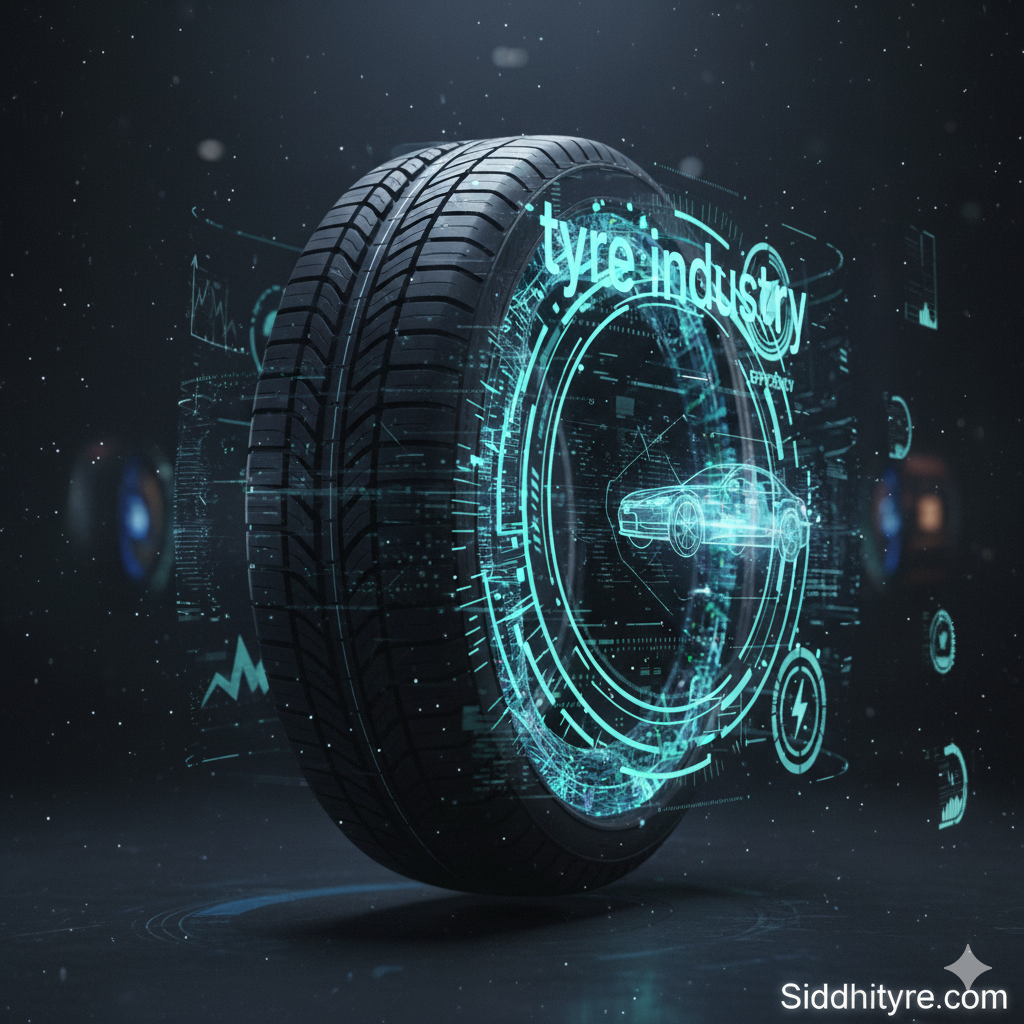
The tyre industry, often perceived as a traditional manufacturing sector, is currently undergoing a dynamic transformation. Driven by technological advancements, evolving consumer demands, and a global push for sustainability, innovation is gripping every facet of tyre design, production, and usage. For businesses like Siddhityre.com, staying ahead of these trends is not just an advantage, but a necessity for future success.
Mumbai Dadar West Siddhivinayak Mandir Near Vijay Sales Prabhadevi
The Smart Tyre Revolution: Beyond Just Rubber
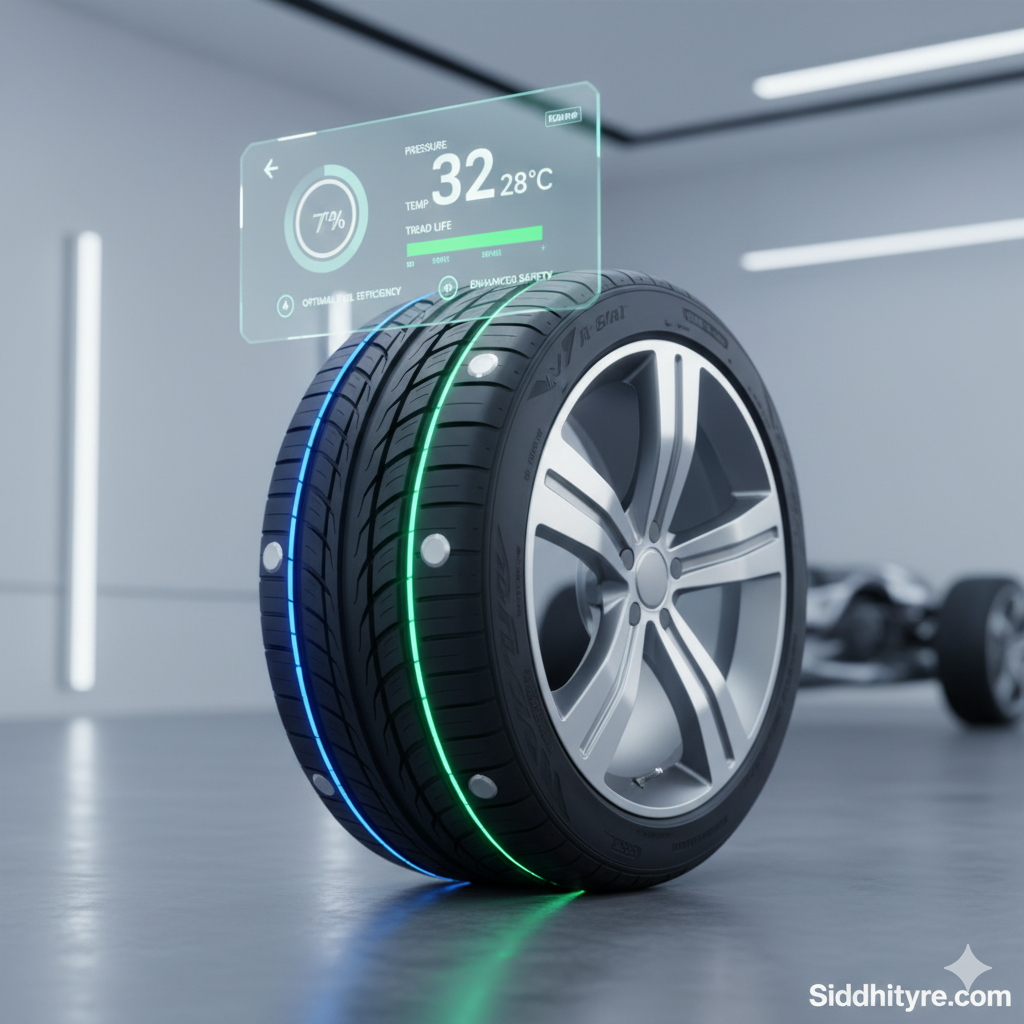
No longer just a passive component, tyres are becoming increasingly intelligent. “Smart tyres” equipped with integrated sensors are emerging as a game-changer. These sensors can monitor crucial parameters like tyre pressure, temperature, and tread depth in real-time, transmitting data directly to the driver or vehicle’s onboard systems.
Impact: This technology significantly enhances safety by alerting drivers to potential issues before they become critical. It also optimizes fuel efficiency by ensuring tyres are always at optimal pressure and extends tyre lifespan by promoting proactive maintenance. For fleet operators, smart tyres translate to reduced downtime and operational costs.
The Green Horizon: Sustainable Tyre Manufacturing
The environmental footprint of manufacturing and disposing of tyres is a significant concern. The industry is responding with a strong focus on sustainability, adopting greener materials and production processes.
Key Developments:
- Eco-friendly Materials: Research into alternative, sustainable materials like natural rubber from dandelions, rice husk ash silica, and recycled plastics is gaining momentum.
- Reduced Rolling Resistance: Tyres designed with lower rolling resistance directly contribute to better fuel economy and reduced CO2 emissions.
- Extended Lifespan: Innovations that increase tyre durability and retreadability reduce the frequency of replacement and the volume of waste.
- Closed-Loop Recycling: Efforts to create more efficient and widespread tyre recycling programs are crucial to achieving a circular economy for tyres.
This shift not only benefits the planet but also resonates with environmentally conscious consumers.
Electric Vehicles (EVs) Driving New Tyre Demands
The exponential growth of the electric vehicle market is presenting unique challenges and opportunities for tyre manufacturers. EVs have different performance characteristics compared to traditional internal combustion engine vehicles, necessitating specialized tyre designs.
EV Tyre Requirements:
- Higher Load Capacity: EV batteries are heavy, requiring tyres that can handle greater loads.
- Lower Rolling Resistance: To maximize range, EV tyres need to minimize energy loss from rolling resistance.
- Reduced Noise: With quieter electric motors, tyre noise becomes more noticeable, leading to a demand for quieter tread patterns.
- Instant Torque Handling: EVs deliver instant torque, requiring tyres with enhanced grip and durability to manage this power effectively.
Manufacturers are actively developing dedicated EV tyre lines, showcasing the industry’s agility in adapting to new automotive landscapes.
Airless Tyres: The Puncture-Proof Future?
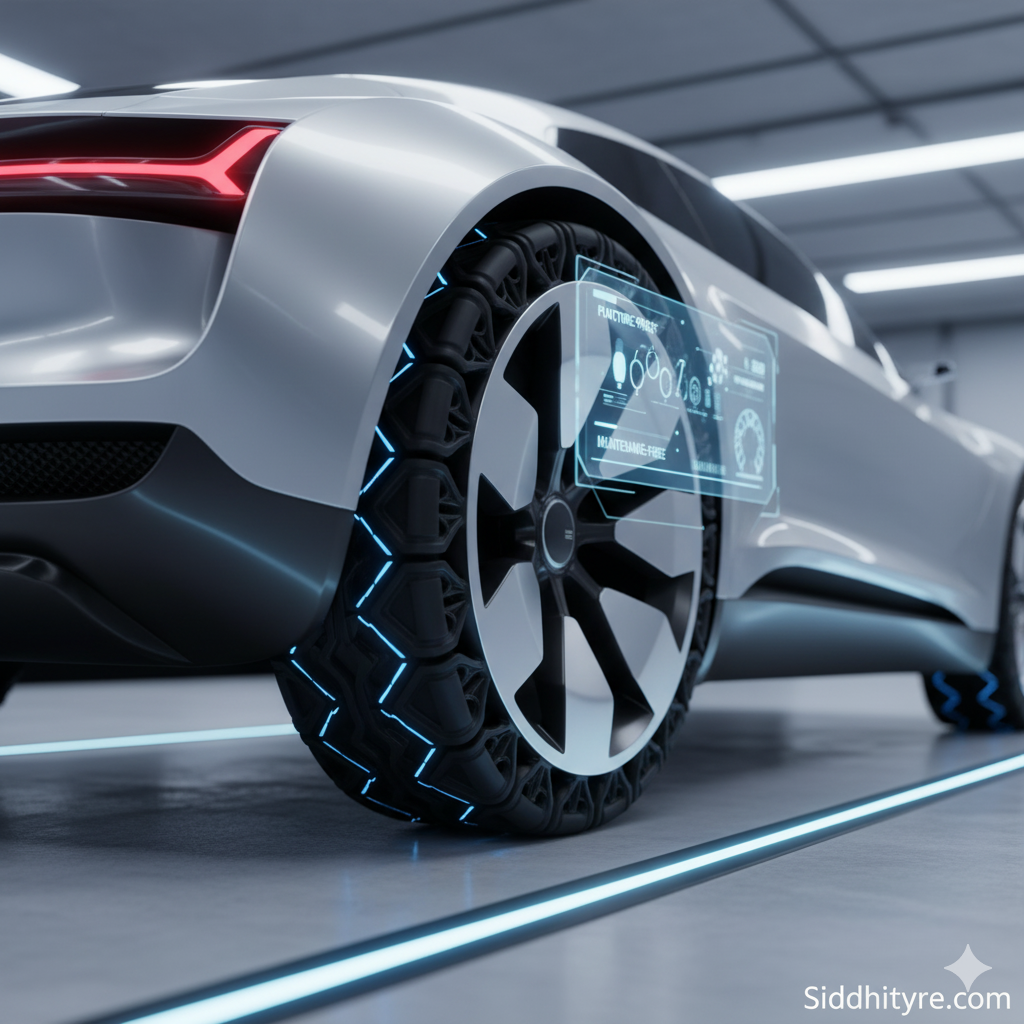
For decades, the concept of airless tyres has been a futuristic dream. Today, major players are bringing this vision closer to reality. These innovative tyres eliminate the need for air pressure, making punctures a thing of the past and significantly reducing maintenance.
Advantages:
- Puncture-Proof: No more flats, enhancing safety and convenience.
- Reduced Maintenance: Eliminates the need for pressure checks.
- Increased Durability: Potentially longer lifespan than pneumatic tyres.
- Sustainability: Easier to recycle due to simplified material composition.
While still largely in testing and niche applications, airless tyres hold immense promise for future mobility solutions, particularly in autonomous vehicles and last-mile delivery.
Officail Website — [ Siddhi Tyre ]
Official India Mart — [ Siddhi Tyre India Mart ]