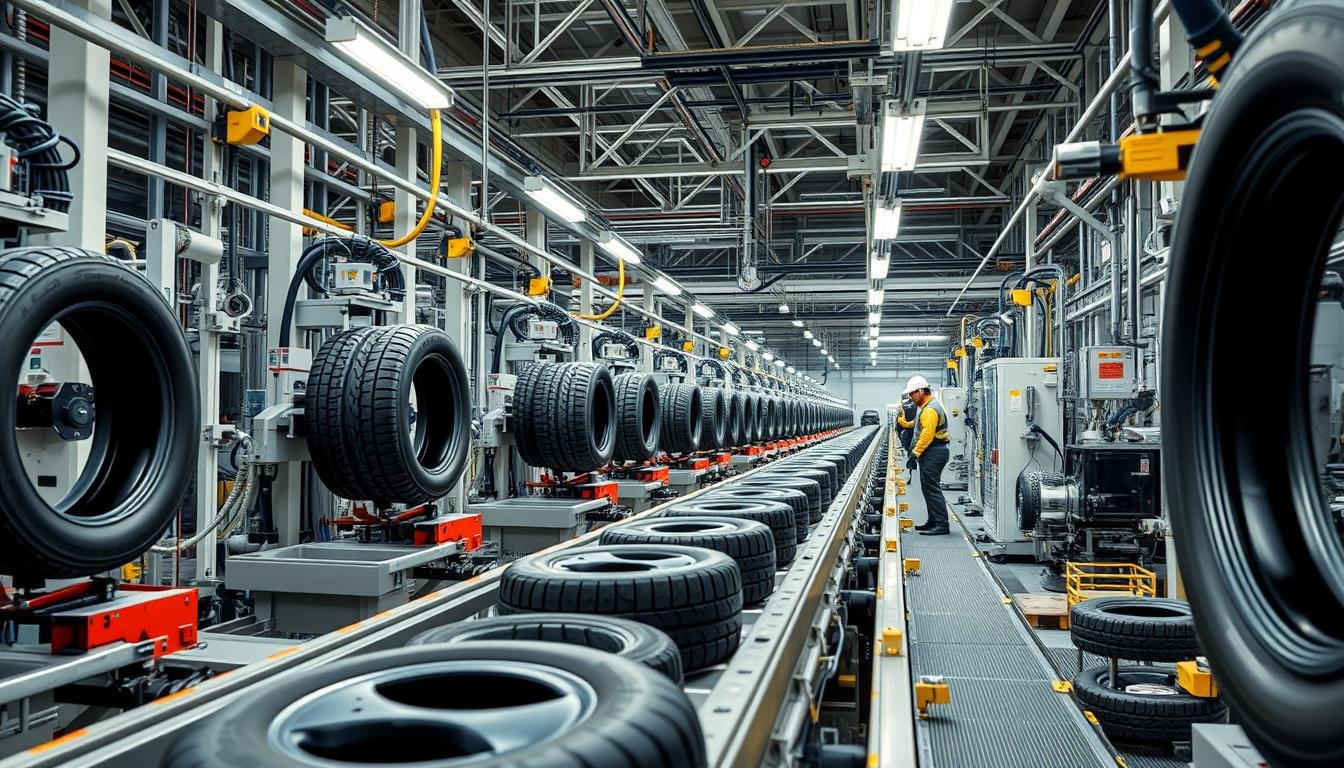
The tyre industry stands as a cornerstone of global transportation, connecting vehicles to roads and enabling mobility worldwide. With over 1 billion tyres manufactured annually, this dynamic sector combines advanced engineering, specialized materials, and precision manufacturing to create products essential for safety, performance, and efficiency in transportation.
Global Tyre Industry: Market Overview
The global tyre industry represents a massive economic force, with market valuations exceeding $250 billion. This sector’s growth is directly tied to automotive production, transportation needs, and technological advancements that continue to reshape how tyres are designed and manufactured.

Asia-Pacific
Led by China, Japan, and India, this region dominates global tyre production with approximately 60% market share. China alone accounts for nearly one-third of worldwide tyre manufacturing capacity.
North America
The United States remains a significant producer and consumer of tyres, with a strong presence of major manufacturers and a robust replacement tyre market driven by high vehicle ownership.
Europe
European manufacturers focus on premium and specialized tyres, with Germany, France, and Italy leading production. The region emphasizes technological innovation and environmental compliance.
The tyre industry continues to consolidate, with the top 10 manufacturers controlling over 60% of the global market. This concentration has intensified competition while driving innovation in manufacturing processes, materials science, and product performance.
Need Quality Tyres for Your Business?
Siddhi Tyre offers comprehensive tyre solutions with industry-leading expertise and competitive pricing.
Tyre Manufacturing: From Raw Materials to Finished Product
Modern tyre production combines sophisticated engineering with precision manufacturing. Understanding this process reveals why quality varies significantly between manufacturers and how advanced technology impacts the final product.

Key Components and Materials
Tyres are complex assemblies containing numerous specialized components, each serving a specific function:
Primary Raw Materials
- Natural Rubber: Harvested from rubber trees, providing elasticity and strength
- Synthetic Rubber: Petroleum-based polymers that enhance specific performance characteristics
- Carbon Black: Reinforcing filler that improves durability and abrasion resistance
- Silica: Modern alternative to carbon black that reduces rolling resistance
- Steel Cord: Provides structural strength in belts and beads
- Textile Fabrics: Including polyester, nylon, and rayon for body ply reinforcement
Tyre Structure Components
- Inner Liner: Air-tight layer that replaces traditional inner tubes
- Body Ply: Fabric layers providing strength and flexibility
- Sidewall: Protects the side of the tyre from environmental damage
- Beads: Steel wire bundles that secure the tyre to the wheel rim
- Belt Package: Steel belts that stabilize the tread area
- Tread: Outer rubber layer providing road contact and traction
Manufacturing Process
The tyre manufacturing process involves several specialized departments working in sequence:

- Compounding: Raw materials are precisely measured and prepared according to proprietary formulations
- Mixing: Ingredients are blended in large internal mixers under controlled conditions
- Component Preparation: Specialized machines create individual tyre components through calendering (sheet materials) and extrusion (profiles)
- Building: Components are assembled on a drum to create a “green” (uncured) tyre
- Curing: The green tyre is placed in a mold under heat and pressure to vulcanize the rubber and create the final shape
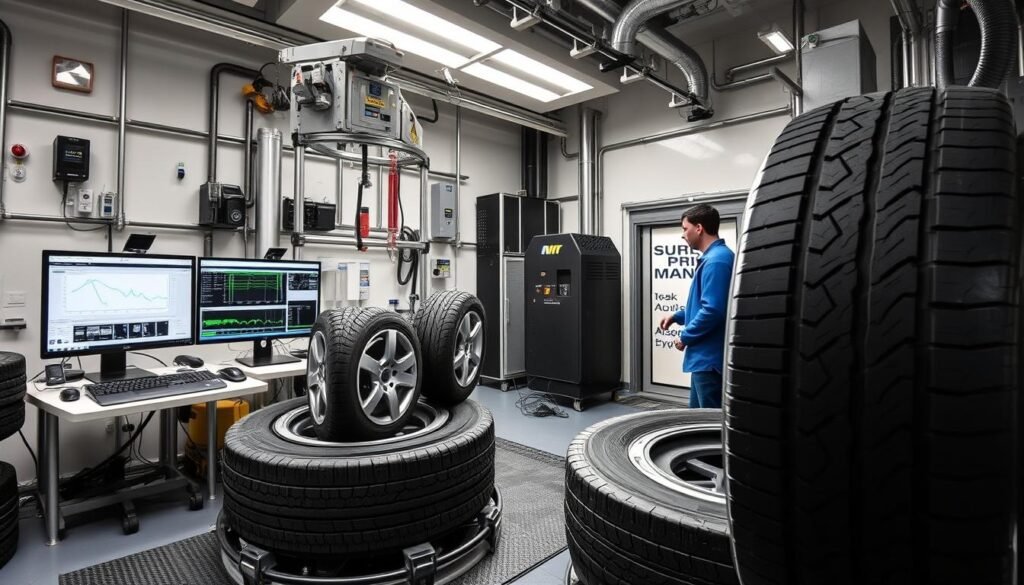
- Inspection: Finished tyres undergo visual inspection and various tests for uniformity, balance, and quality
This complex manufacturing process requires precision at every stage. Even minor variations in materials or process parameters can significantly impact tyre performance, durability, and safety.
Current Trends Shaping the Tyre Industry
The tyre industry is experiencing rapid transformation driven by technological innovation, changing consumer preferences, and environmental considerations. These trends are reshaping how tyres are designed, manufactured, and used.
Sustainability Focus
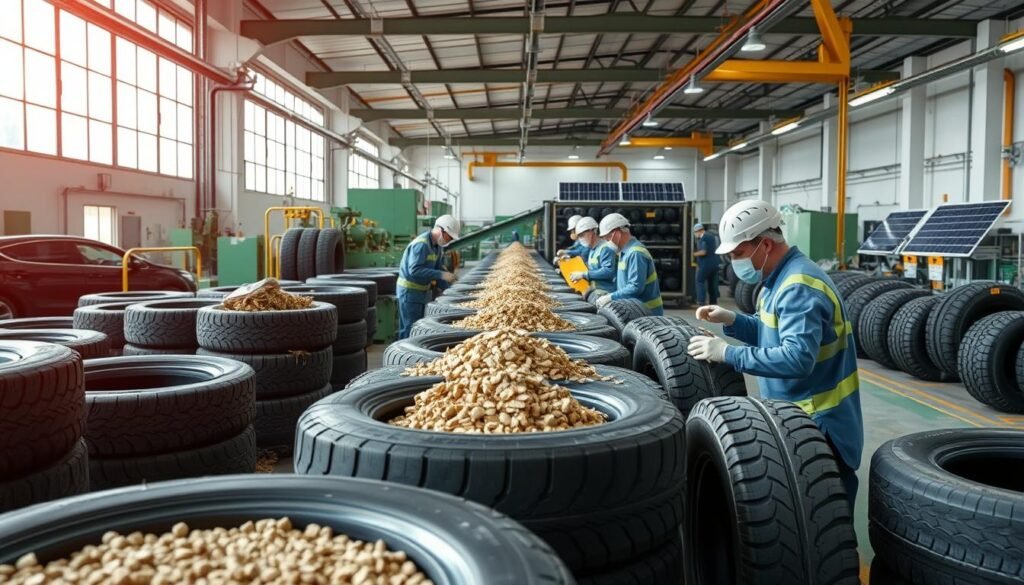
Manufacturers are increasingly adopting sustainable practices, from sourcing responsibly produced natural rubber to developing tyres with higher percentages of renewable and recycled materials. The industry is working to reduce environmental impact throughout the product lifecycle.
Electric Vehicle Tyres
The rise of electric vehicles has created demand for specialized tyres that address unique requirements like reduced rolling resistance for extended range, enhanced load-bearing capacity for battery weight, and quieter operation to complement EV silence.
Smart Tyre Technology
Integration of sensors and connectivity features is enabling tyres to communicate real-time data on pressure, temperature, tread wear, and road conditions. This technology enhances safety while providing valuable information for fleet management.
Addressing Environmental Challenges
The tyre industry faces increasing scrutiny regarding environmental impact, particularly concerning:
Tire and Road Wear Particles (TRWP)
As tyres wear during normal use, they generate particles that can impact the environment. The industry is researching this phenomenon while developing compounds that minimize particulate generation without compromising performance.
End-of-Life Management
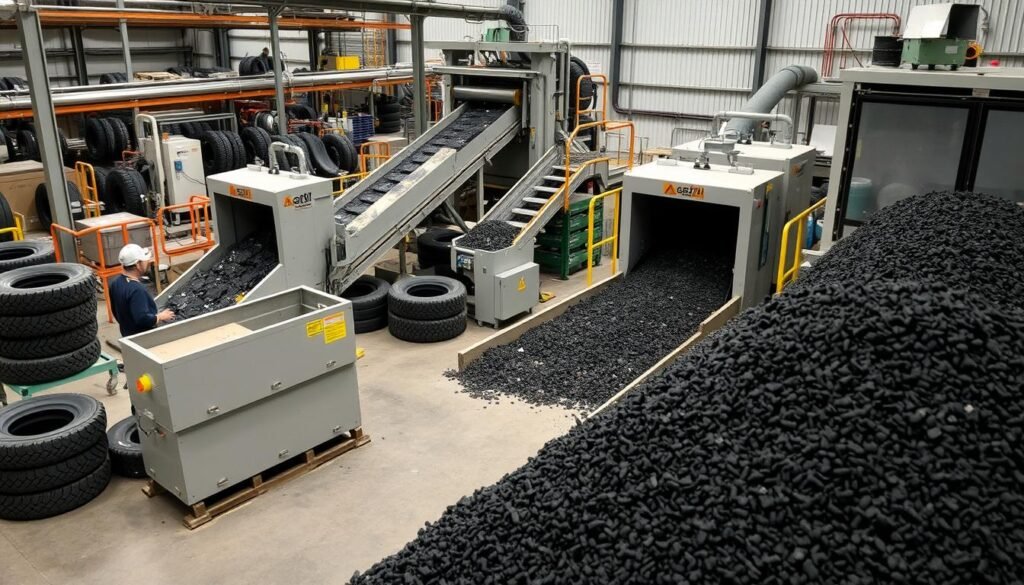
Proper handling of used tyres remains a global challenge. Advanced recycling technologies are creating new opportunities to recover valuable materials from end-of-life tyres for use in new products, from playground surfaces to construction materials.
Looking for Eco-Friendly Tyre Options?
Siddhi Tyre offers sustainable solutions that don’t compromise on performance or safety.
Tyre Industry: Opportunities and Challenges
The global tyre sector faces a complex landscape of opportunities for growth alongside significant challenges that require innovative solutions.
Industry Growth Drivers
- Expanding Automotive Market: Growing vehicle production in emerging economies
- Replacement Demand: Steady need for replacement tyres in established markets
- Technological Innovation: New materials and manufacturing processes improving performance
- Specialty Segments: Growing demand for high-performance and specialized tyres
- Infrastructure Development: Road construction projects increasing tyre demand
Industry Challenges
- Raw Material Volatility: Fluctuating prices of natural rubber and petroleum-based inputs
- Environmental Regulations: Increasing compliance requirements and sustainability standards
- Market Consolidation: Intensifying competition among major manufacturers
- Alternative Transportation: Ride-sharing and public transit potentially reducing personal vehicle use
Quality Differentiation in the Market
With numerous manufacturers competing globally, quality has become a key differentiator. Premium tyres offer enhanced performance characteristics including:
Manufacturers must balance these performance characteristics while meeting price points appropriate for their target markets. This challenge drives continuous innovation in materials and manufacturing processes.
Why Choose Siddhi Tyre for Your Needs
In the competitive tyre industry landscape, Siddhi Tyre stands out as a reliable partner offering quality products and exceptional service to meet diverse customer requirements.
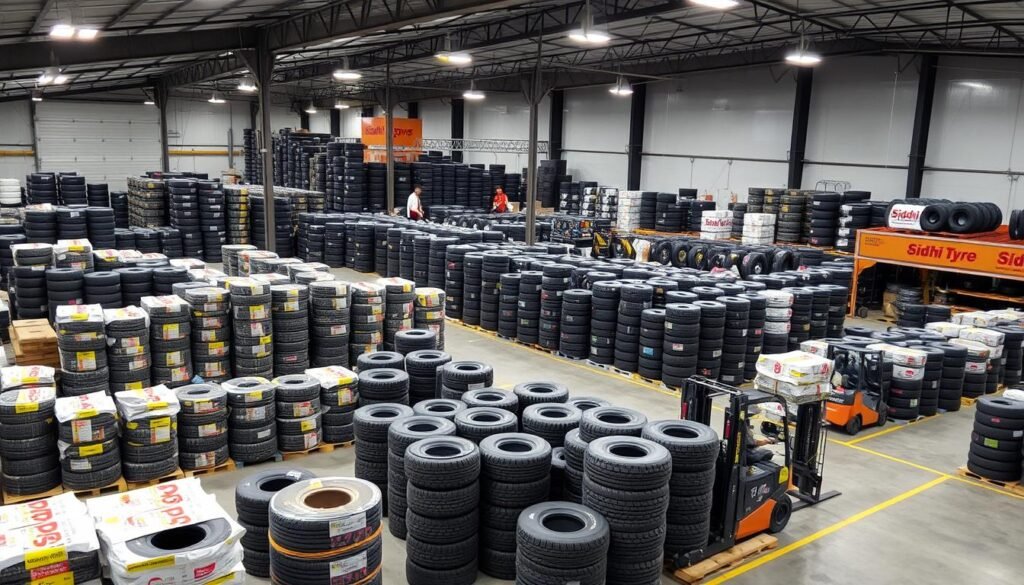
Quality Assurance
Our tyres undergo rigorous testing to ensure they meet or exceed industry standards for safety, performance, and durability. We source from manufacturers who maintain strict quality control throughout the production process.
Comprehensive Selection
From passenger vehicles to commercial trucks, agricultural equipment to industrial applications, our extensive inventory ensures we have the right tyre for every need and budget.
Expert Consultation
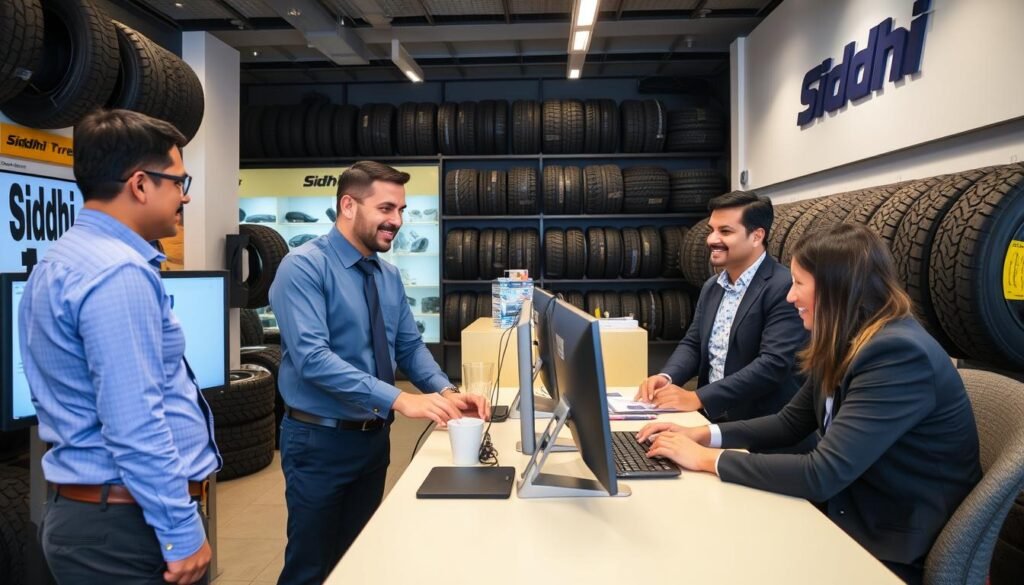
Our team of industry specialists provides personalized recommendations based on your specific requirements, helping you select the optimal tyre solution for your application.
At Siddhi Tyre, we understand that the right tyre makes all the difference in performance, safety, and operational efficiency. Our commitment to quality and customer satisfaction drives everything we do.
Ready to Experience Superior Tyre Solutions?
Contact Siddhi Tyre today to discuss your requirements and discover how we can help optimize your tyre performance and value.
Frequently Asked Questions About the Tyre Industry
How are tyres recycled and what happens to end-of-life tyres?
End-of-life tyres are processed through various recycling methods including mechanical shredding, cryogenic processing, and pyrolysis. The recovered materials find new life in applications such as playground surfaces, athletic tracks, rubberized asphalt, and even as fuel in cement kilns. Modern recycling technologies continue to improve recovery rates and find new uses for tyre-derived materials.
What makes electric vehicle tyres different from conventional tyres?
Electric vehicle tyres are specially designed to address the unique characteristics of EVs. They feature lower rolling resistance to maximize battery range, enhanced load-bearing capacity to support battery weight, reinforced construction to handle instant torque, and noise-reduction technology to complement the quiet operation of electric motors. These specialized designs help optimize EV performance and efficiency.
How is the tyre industry addressing environmental sustainability?
The tyre industry is implementing multiple strategies to improve sustainability, including developing compounds with higher percentages of renewable and recycled materials, reducing energy and water consumption in manufacturing, establishing responsible natural rubber sourcing programs, designing tyres with lower rolling resistance to improve vehicle fuel efficiency, and investing in advanced recycling technologies for end-of-life tyres.

Driving Forward: The Future of the Tyre Industry
The global tyre industry continues to evolve rapidly, balancing technological innovation with environmental responsibility. As vehicles become more specialized and performance expectations rise, tyre manufacturers must adapt through advanced materials, smarter designs, and more efficient production methods.
At Siddhi Tyre, we remain committed to staying at the forefront of these industry developments, offering our customers the latest innovations while maintaining our core values of quality, reliability, and exceptional service. Whether you’re managing a fleet of commercial vehicles or seeking the perfect tyres for your personal automobile, our team is ready to provide expert guidance and superior products.
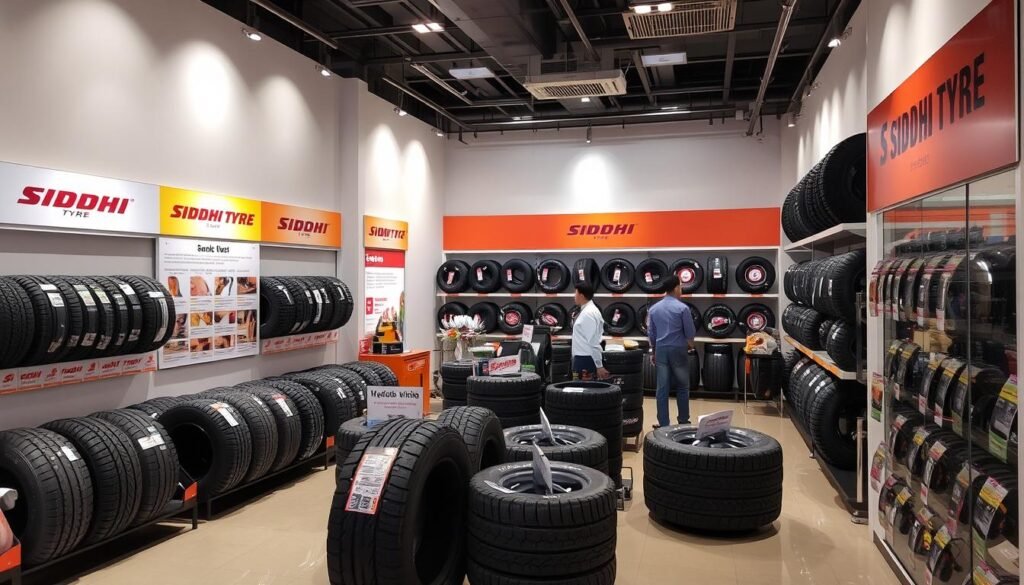
Partner with Siddhi Tyre for All Your Tyre Needs
Visit our website or contact us directly to explore our comprehensive range of tyre solutions and expert services.