What you’ll learn in this guide: how run flat tyres work, types and construction, real-world limits (miles and mph), repairability, compatibility with TPMS, cost comparisons for 2025, and practical steps to take after an air-pressure loss.
Need help now? Call 9082261908 or visit Siddhi Tyre on IndiaMART to check RFT options, fitment and warranties.
What Are Run Flat Tyres?
Run flat tyres are specially engineered tyres designed to support vehicle weight even after a complete loss of air pressure, letting you continue driving to a safe location or service station instead of being stranded roadside. Unlike conventional tires, run flat technology provides temporary mobility after a puncture so you can control the situation and reach help.
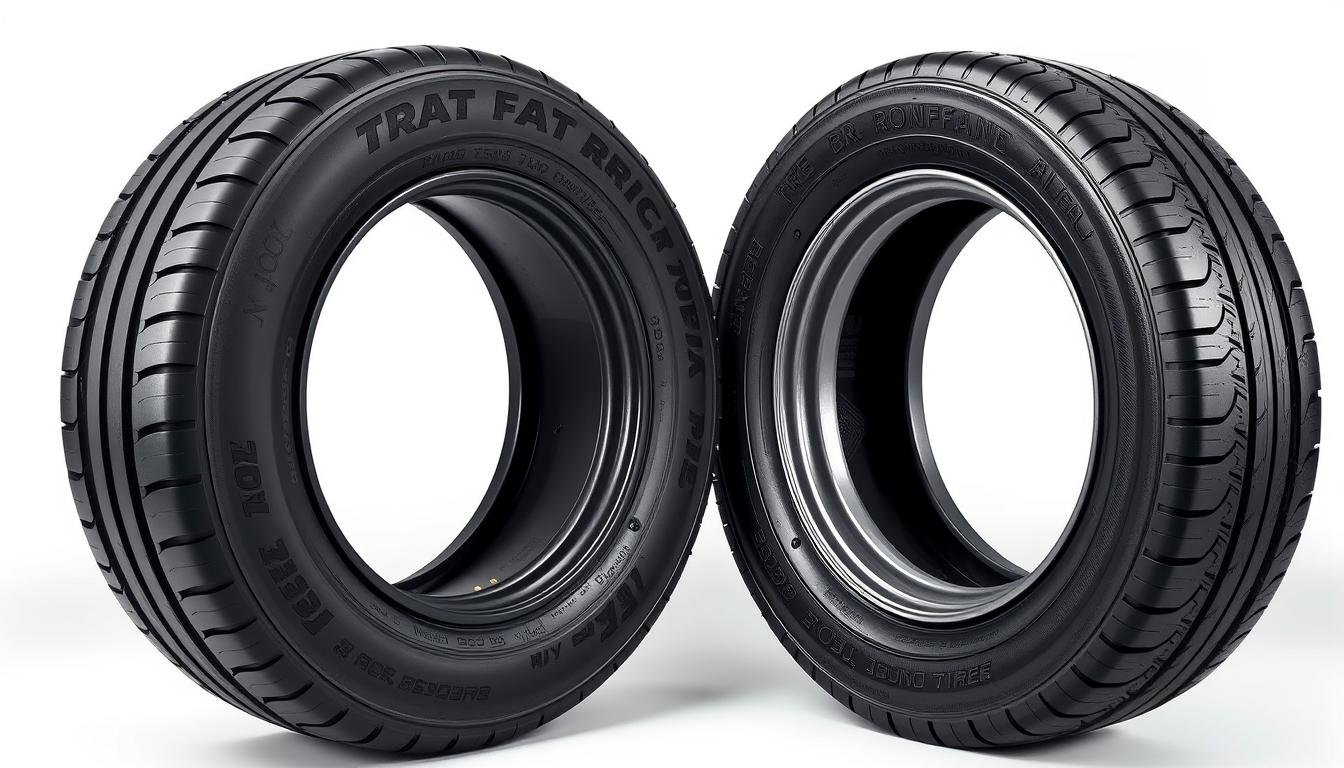
Run flat tyre (left) with reinforced sidewall compared to conventional tyre (right) — reinforced sidewalls are a common run flat construction
- How run flats differ from conventional tyres:
- Reinforced sidewalls (self-supporting) carry the vehicle weight when air pressure is lost.
- Support ring designs place a rigid ring on the wheel to bear load if air is lost.
- Run flats must be paired with a working TPMS so drivers know immediately when air pressure drops.
Quick facts: Typical limited-run capability ~50 miles, typical maximum speed after puncture ~50 mph. In many cases a spare tire isn’t required when you use run flats, but always follow your vehicle manufacturer’s guidance.
Run-flat tires (many OEMs began experimenting in the 1980s) have seen wider adoption as carmakers prioritize safety and convenience. If you want to explore RFT Tyre options, ask about specific types and construction for your vehicle — call 9082261908 or visit Siddhi Tyre on IndiaMART.
How Do Run Flat Tyres Work?
Run flat tyres use engineered construction and specific tyre systems so the tyre can maintain enough structure to support the vehicle even after an air pressure loss. Two primary run-flat systems are used in modern passenger vehicles: self-supporting (reinforced sidewalls) and support ring designs. Both are built to let you drive to a safe location or service station after a puncture, but they differ in construction, weight, ride feel and repairability.
Self-Supporting System
The most common run-flat tires rely on reinforced sidewalls made from stiffer, heat-resistant rubber compounds and layered internal structure. These reinforced sidewalls temporarily carry the vehicle weight when tyre pressure drops, preventing the tyre from collapsing and allowing controlled driving at reduced speed and distance. This construction trades some ride comfort for the ability to support vehicle weight after a puncture.
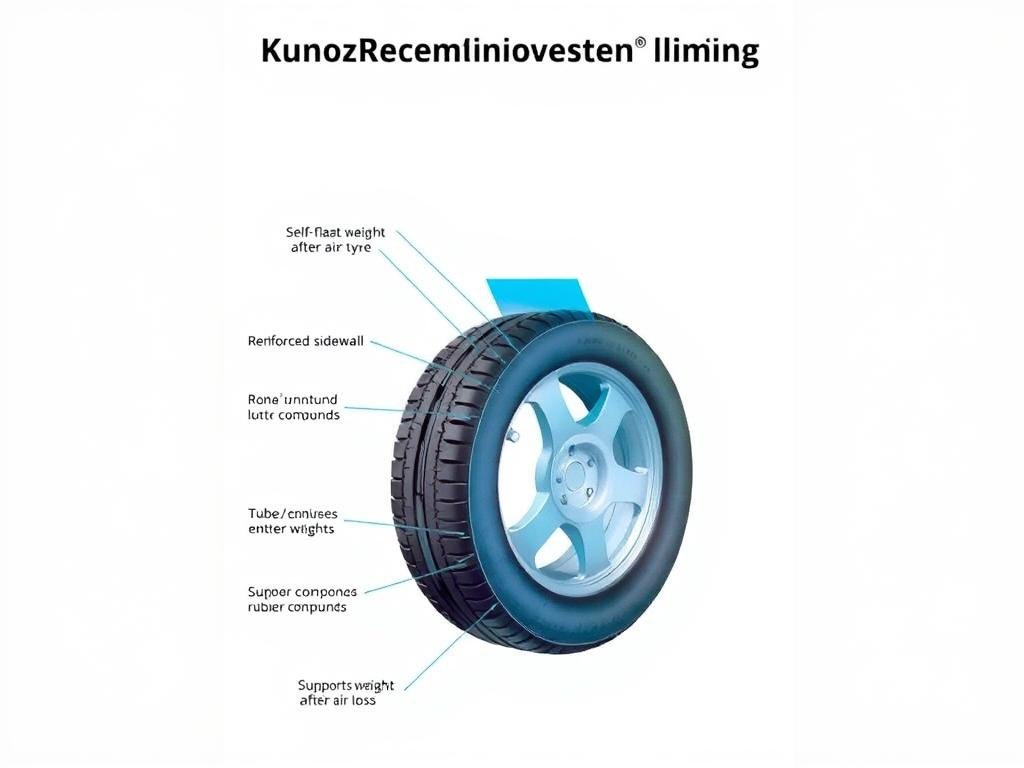
Self-supporting run-flat tyre: reinforced sidewalls and specialized construction let the tyre support vehicle weight after air loss
Support Ring System
Support ring systems use a rigid ring — typically hard rubber or composite material — mounted to the wheel that bears the vehicle’s load if the tyre deflates. This ring supports the tyre from the inside rather than relying on the sidewall. Support-ring designs provide excellent stability and are commonly seen in specialist or military applications; they are less common on everyday passenger cars due to added complexity and weight.

Support ring system: a rigid ring around the wheel supports the vehicle when air pressure is lost
Quick comparison — pros & cons
- Self-supporting: Lighter integration with standard wheels, common OEM fitment, firmer ride, repairability limited depending on damage.
- Support ring: Very stable under load loss, can be heavier and more complex to service, less common for everyday passenger vehicles.
TPMS Integration: Essential for Safety
Because run-flat tyres can maintain shape after a puncture, you may not feel the loss of pressure — that’s why a Tyre Pressure Monitoring System (TPMS) is essential. TPMS alerts drivers immediately when tyre pressure drops so they can reduce speed, avoid hard steering or braking, and head to a safe location or service station. In many markets and for most manufacturers, TPMS is highly recommended or required when using run-flat tires.
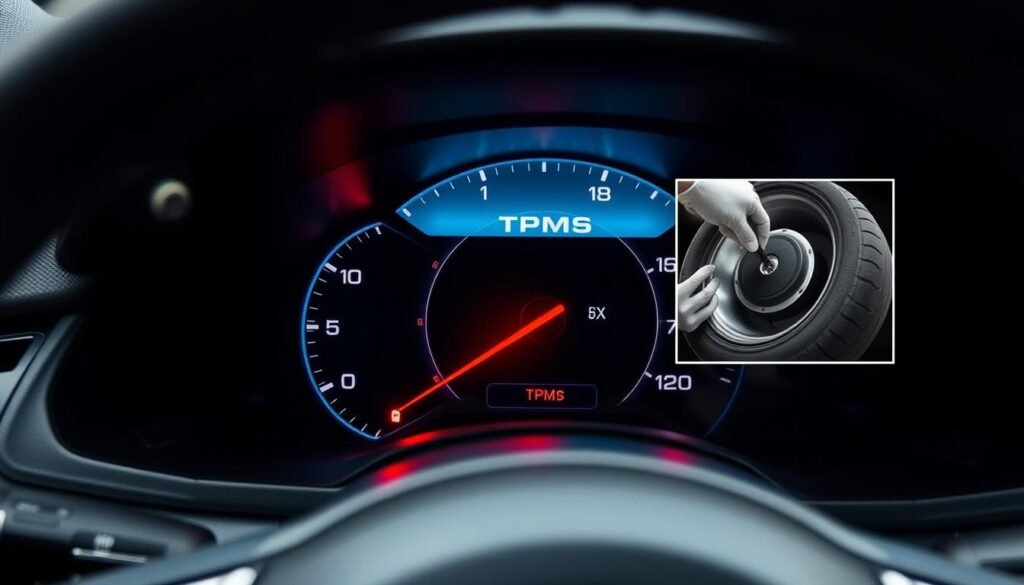
TPMS dashboard warning and sensors: essential to detect air pressure loss in run-flat tyre systems
After a run on a punctured run-flat tyre — quick checklist: 1) Slow to recommended speed, 2) Avoid hard cornering or heavy braking, 3) Drive directly to a safe location or service station, 4) Have the tyre inspected for sidewall heating, internal damage or rim/sensor issues, and 5) Ask whether repair is allowed — many manufacturers recommend replacement.
If you want professional inspection, installation or advice about construction, structure and compatibility for your vehicle, call 9082261908 or visit Siddhi Tyre on IndiaMART to discuss run-flat tires and fitment options.
How Long Can You Drive on a Flat Run Flat Tyre?
Run flat tyres give you crucial mobility after a puncture or sudden air loss, but they are not a permanent fix. Knowing realistic limits — and acting immediately when TPMS alerts — keeps you safe and prevents further tire or rim damage.
| Parameter | Typical Limit | Factors Affecting Performance |
| Maximum Distance | About 50 miles (80 km) typical — varies by model | Vehicle weight, road conditions, outside temperature, extent of damage |
| Maximum Speed | Usually up to 50 mph (80 km/h) recommended | Tyre temperature, severity of puncture, manufacturer guidance |
| Load Capacity | Often reduced (roughly 30–50% under deflated conditions) | Passenger/cargo weight, tyre construction, age/wear |
Quick scenario: TPMS indicates pressure loss — you reduce speed to 45 mph, keep steady steering, and drive for 20–40 miles to the nearest service station. This controlled approach limits further damage and gets you to professional help safely.
Important: manufacturer limits vary. Some Bridgestone and Michelin run-flat tires advise up to ~50 miles at reduced speeds, but always check the sidewall marking and your vehicle owner’s manual for exact distance and mph limits. If in doubt, stop at the nearest safe location and call for assistance.
If TPMS alerts or you suspect an even puncture — immediate steps:
- Reduce speed immediately (follow the tyre manufacturer mph guidance).
- Avoid sharp turns, heavy braking or lane changes.
- Drive directly to a safe location or service station; note the time and distance you drive after the alert.
- Have the tyre inspected for sidewall heat, structural damage, and TPMS sensor issues — many run-flat repairs are not recommended, so replacement may be required.
If you need professional advice or same-day inspection, call 9082261908 or visit Siddhi Tyre on IndiaMART to check compatible run-flat tyre options and local service availability.
Benefits of Run Flat Tyres
Advantages of Run Flat Tyres
- Enhanced Safety: Run flat tyres reduce the risk of dangerous roadside stops by letting you drive to a safe location after a puncture, improving overall vehicle control during an air-pressure loss.
- Convenience: No immediate roadside tyre changes needed — you can reach a service station or your preferred garage rather than stopping in a hazardous spot.
- Space Saving: Eliminates or reduces the need for a full-size spare tire, freeing trunk space and simplifying vehicle packing.
- Stability: Reinforced construction provides better handling during sudden air loss compared to many conventional tires, helping maintain steerability.
- Peace of Mind: Ideal for long-distance commuters, families, and drivers in remote areas who value the extra margin of safety against flat tires.
Limitations of Run Flat Tyres
- Higher Cost: Typically 20–40% more expensive than comparable conventional tyres; pricing varies by brand and region.
- Firmer Ride: Stiffer, reinforced sidewalls can create a firmer ride feel compared with standard tyres.
- Weight: Slightly heavier construction can marginally affect fuel economy — often a 1–2% impact that may be offset by not carrying a spare.
- Repair Limitations: Many manufacturers recommend replacement rather than repair after running flat due to potential internal damage; small tread repairs may be possible in limited cases.
- Availability: Not every service station stocks run flats; check availability and warranty/repair policies before relying on them in remote areas.
Run flat tyres allow continued safe driving after a puncture — look for sidewall markings like “RFT,” “Run Flat,” or “ZP.”
Who Should Consider Run Flats?
- Highway commuters and long-distance drivers who prioritize safety and avoiding roadside stops.
- Families and drivers who prefer trunk space over carrying a spare tire.
- Owners of vehicles originally equipped with run flats or those with functioning TPMS systems.
Quick cost-benefit note: You pay a premium for run flats (higher tyre cost), but you gain safety, reduced roadside risk and potential weight savings from no spare tire. Ask about warranty, repair policy and manufacturing date code when comparing prices.
Experience Worry-Free Driving
Don’t let flat tyres disrupt your journey. Run flat technology keeps you moving safely when conventional tyres would leave you stranded.
Call 9082261908 or visit Siddhi Tyre on IndiaMART to check stock, fitment, warranty and professional installation for run flats.
2025 Run Flat Tyre Cost Comparison: India vs USA
Run flat tyres occupy a premium segment of the tyre market — prices differ widely by brand, model and region. The table below shows typical 2025 retail ranges to help you budget for a set of run-flat tires and compare the cost vs conventional tyres and carrying a spare tire.
| Factor | India (₹) | USA ($) |
| Average Cost Per Tyre | ₹15,000 – ₹35,000 | $150 – $500 |
| Full Set (4 Tyres) | ₹60,000 – ₹140,000 | $600 – $2,000 |
| Premium Brands | Bridgestone: ₹25,000+ Michelin: ₹28,000+ |
Bridgestone: $250+ Michelin: $280+ |
| Mid-Range Brands | Continental: ₹20,000+ Pirelli: ₹22,000+ |
Continental: $200+ Pirelli: $220+ |
| Additional Costs | GST (28%) Import duties (if applicable) Mounting & balancing |
Sales tax (varies by state) Installation: $15–$45 per tire TPMS service/ programming |
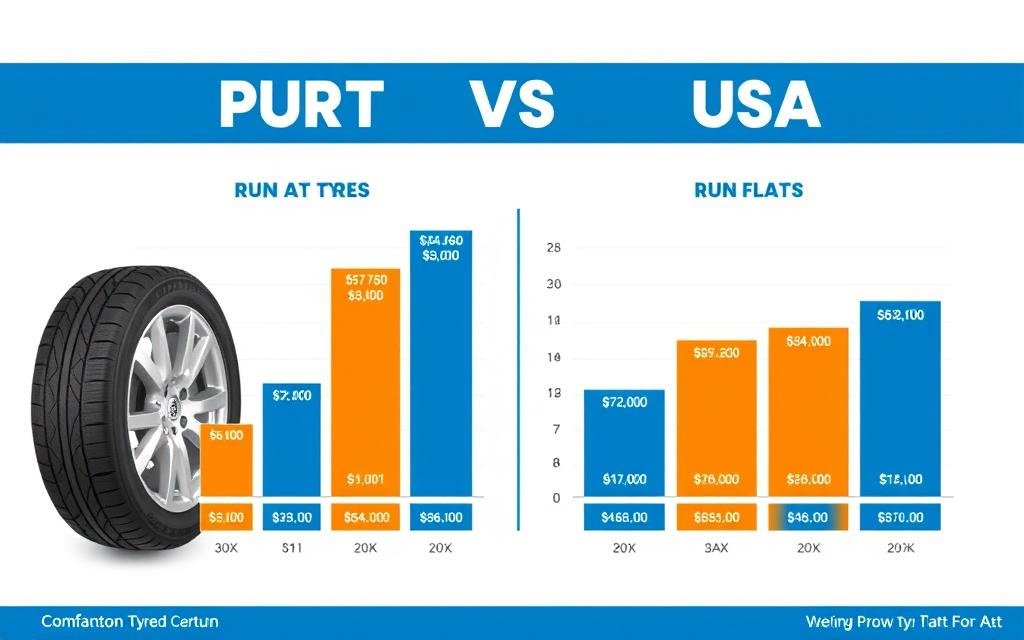
Run flat tyre price comparison across popular brands in India and USA (2025). Prices vary by model, size and retailer.
Buying Tips for Run Flat Tyres
- Check vehicle compatibility: Confirm your vehicle is designed for run flat tires and that wheel/tire sizing, load index and speed rating match OEM specs.
- Verify TPMS functionality: A working tyre pressure monitoring system is essential for run flats — budget for sensor service if needed.
- Don’t mix tyre types: Avoid mixing run-flat tires and conventional tires on the same axle; many manufacturers recommend replacing all four for best control and wear.
- Consider warranty & repair policy: Ask whether run-flat tires are repairable (many brands recommend replacement after a run-flat event) and check mileage and defect warranties.
- Check date codes & stock: Buy the freshest tyres possible — check the DOT/mfg date on the sidewall before purchase.
Short ROI note
Run-flat tires cost more up front but can save time, reduce roadside risk and remove the need for a full-size spare (trunk weight savings). For many drivers the safety and convenience outweigh the higher tire price; for others, especially those in areas with easy service access, conventional tires plus a spare may be a lower-cost option.
Suggested product searches: “Bridgestone run flat 2025 RFT,” “Michelin run-flat tire models,” or check model-specific lines like Bridgestone DriveGuard. For live stock, fitment checks and pricing, call 9082261908 or visit Siddhi Tyre on IndiaMART — they can advise on run flat tires, service station availability and installation.
Is Your Vehicle Compatible with Run Flat Tyres?
Not every vehicle is suited to run flat tyres. Before switching, confirm compatibility by checking your vehicle’s specifications, TPMS status, wheel/rim clearance and recommended load/speed ratings. Using the wrong type can affect handling, tire wear and safety — so verify before you buy.
Compatible Vehicle Types
- Luxury sedans and vehicles frequently factory-equipped with RFTs (examples: many BMW and Mercedes-Benz models).
- Sports cars and premium SUVs where manufacturers specify run-flat tire options.
- Vehicles originally fitted with run flats — replacement with the same run-flat tire type is usually recommended for consistent handling.
- Cars with a functioning Tyre Pressure Monitoring System (TPMS) and matching wheel/rim clearance.
Typically Incompatible
- Older vehicles (pre-2000) or cars without TPMS — lack of monitoring makes run flats risky.
- Heavy-duty trucks and many off-road specialized vehicles — support-ring and run-flat systems may not suit extreme loads or terrain.
- Vehicles with modified suspension or non-standard wheel setups — installation may require suspension tuning or different sizing.
- Any car where mixing run-flat and conventional tires would create uneven handling — avoid mixing types on the same axle.
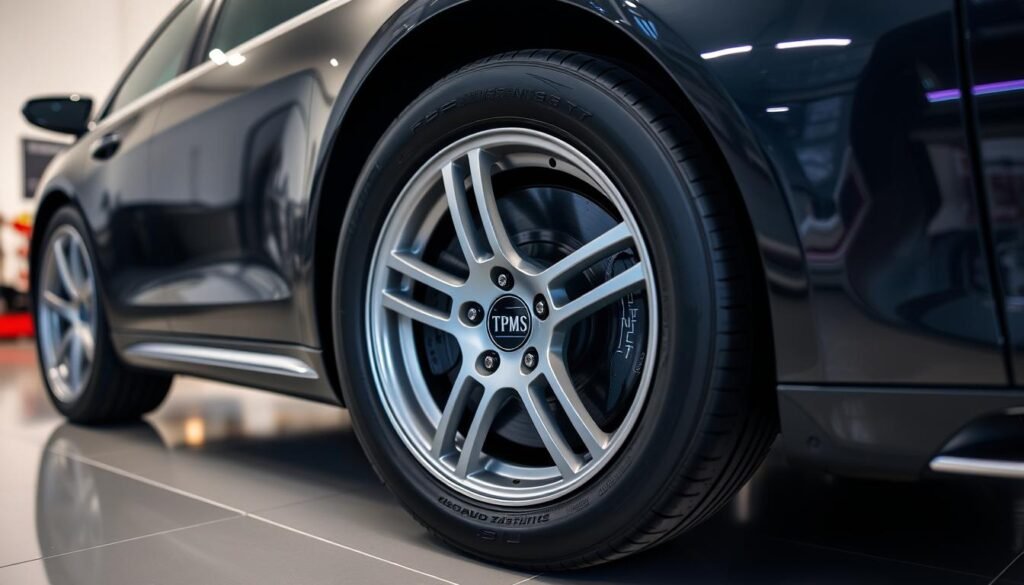
Modern vehicles with TPMS systems and correct wheel clearance are ideal candidates for run flats
Important: Always consult your owner’s manual and the tyre placard for load index and speed rating before installing run-flat tires. Some vehicles may require suspension tuning to compensate for the stiffer sidewalls of run flats.
Quick compatibility checklist
- Working TPMS installed and verified.
- Wheel/rim clearance and bolt pattern compatible with run-flat tire construction.
- Load index and speed rating match vehicle placard and driving needs (check speeds mph limits for run-flat operation).
- Manufacturer approval or documented OEM fitment for your car model.
- Plan to replace in matched sets (avoid mixing run flats with conventional tires on the same axle).
Check Your Vehicle’s Compatibility
Not sure if your vehicle is a fit for run-flat tyre types? Provide your VIN or model/year to a tyre expert for a precise check — they can confirm tire pressure requirements, vehicle weight limits and recommended replacements.
Call 9082261908 or visit Siddhi Tyre on IndiaMART to submit your VIN/model and get a compatibility report and quotation.
Conclusion: Are Run Flat Tyres Right For You?
Run flat tyres offer clear safety and convenience advantages for many drivers: they reduce the risk of dangerous roadside stops, let you drive to a safe location or service station after a puncture, and free up trunk space by eliminating the need for a full-size spare tire. These benefits often outweigh the higher upfront cost for people who regularly drive on highways, travel in remote areas, or prioritize peace of mind.
Consider run flat tyres if you:
- Drive frequently on highways or in areas where stopping is dangerous or inconvenient
- Value trunk space and want to avoid carrying a spare tire
- Want enhanced stability and better control during sudden tyre pressure loss
- Own a compatible vehicle with a functioning TPMS system and OEM approval for run-flat tire types
Keep in mind: run flats cost more and can deliver a firmer ride, and many manufacturers recommend replacement rather than repair after a run-flat event. Technology is improving — newer run-flat constructions aim to reduce the ride comfort tradeoff while preserving safety and support under air loss — so prices and performance are gradually becoming more competitive.

Run flat tyres provide peace of mind for families and drivers — photo examples should include sidewall markings, TPMS display and service-station inspection shots.
Drive with Confidence
Ready to upgrade to run flat tyres or need a compatibility check? For model advice, pricing and installation bookings, call 9082261908 or visit Siddhi Tyre on IndiaMART. Our team can confirm fitment, service-station availability and warranty details.
Frequently Asked Questions About Run Flat Tyres
Can run flat tyres be repaired after a puncture?
Some run-flat tires can be repaired if the puncture is limited to the tread area and the hole is small (commonly cited as ≤6mm), but many manufacturers and tyre shops recommend replacement because internal construction or reinforced sidewalls may be damaged during an event. After any puncture or even puncture-related run, have the tyre inspected by a qualified technician — do not assume repair is safe without professional assessment.
How long do run flat tyres typically last?
Under normal conditions run-flat tires usually last in the same broad range as many premium tyres — roughly 30,000 to 50,000 miles — though wear patterns can differ because of their construction. Some drivers report slightly lower overall life (for example ~6,000 miles less) compared with comparable conventional tyres; actual life depends on driving habits, tyre pressure maintenance, load and alignment.
Can I switch from conventional tyres to run flat tyres?
Yes, but only when your vehicle is compatible. You should have a functioning Tyre Pressure Monitoring System (TPMS), confirm wheel/rim compatibility and load/speed ratings, and ideally match OEM recommendations. Avoid mixing run-flat and conventional tyres on the same axle — for predictable handling, many experts recommend replacing tyres in sets.
Do run flat tyres affect fuel economy?
Run-flat tyres can have a small effect on fuel economy because they are often heavier and have different rolling-resistance characteristics due to reinforced sidewalls. Typical estimates show a modest reduction (around 1–2%), though this can be offset by the weight savings from not carrying a spare tire and jack. Real-world impact varies by tyre model and vehicle.
Are run flats more expensive to replace?
Yes — run-flat tires are typically in a higher price bracket than comparable conventional tires. Expect a premium per tyre (varies by brand and region). Factor in potential additional costs for TPMS sensor service and the possibility that some punctures require replacement rather than repair, which affects long-term cost.
What should I do immediately after a TPMS alert or suspected puncture?
If TPMS alerts or you suspect a puncture: 1) Slow down safely and avoid hard braking or sharp steering; 2) Follow the tyre manufacturer’s recommended maximum mph for run-flat driving; 3) Drive at reduced speed directly to a safe location or service station; 4) Note time and distance after the alert and have the tyre inspected for internal damage, sidewall heat or sensor issues; 5) If in doubt, call for roadside assistance rather than risking further damage.
How do I read sidewall markings to confirm run-flat tyres?
Look for run-flat designations on the tyre sidewall — common markings include “RFT,” “Run Flat,” “ZP” (Zero Pressure) or manufacturer-specific codes. Also check the DOT date code (manufacturing week/year) and the load index/speed rating to ensure the tyre matches your vehicle’s placard.
Where can I get run-flat tyres inspected or replaced?
Many authorised dealers and speciality tyre shops service run-flat tires, but availability varies. If you need inspection or same-day replacement, call a trusted supplier — for example, contact Siddhi Tyre at 9082261908 or visit their IndiaMART page to check stock, service station options and fitment for your vehicle.