- Understand radial construction and how it differs from bias tyres.
- Learn selection tips, maintenance best practices, and real-world performance benefits.
- Get region-specific notes for Indian radial tyre markets and U.S. standards.
What Are Radial Tyres?
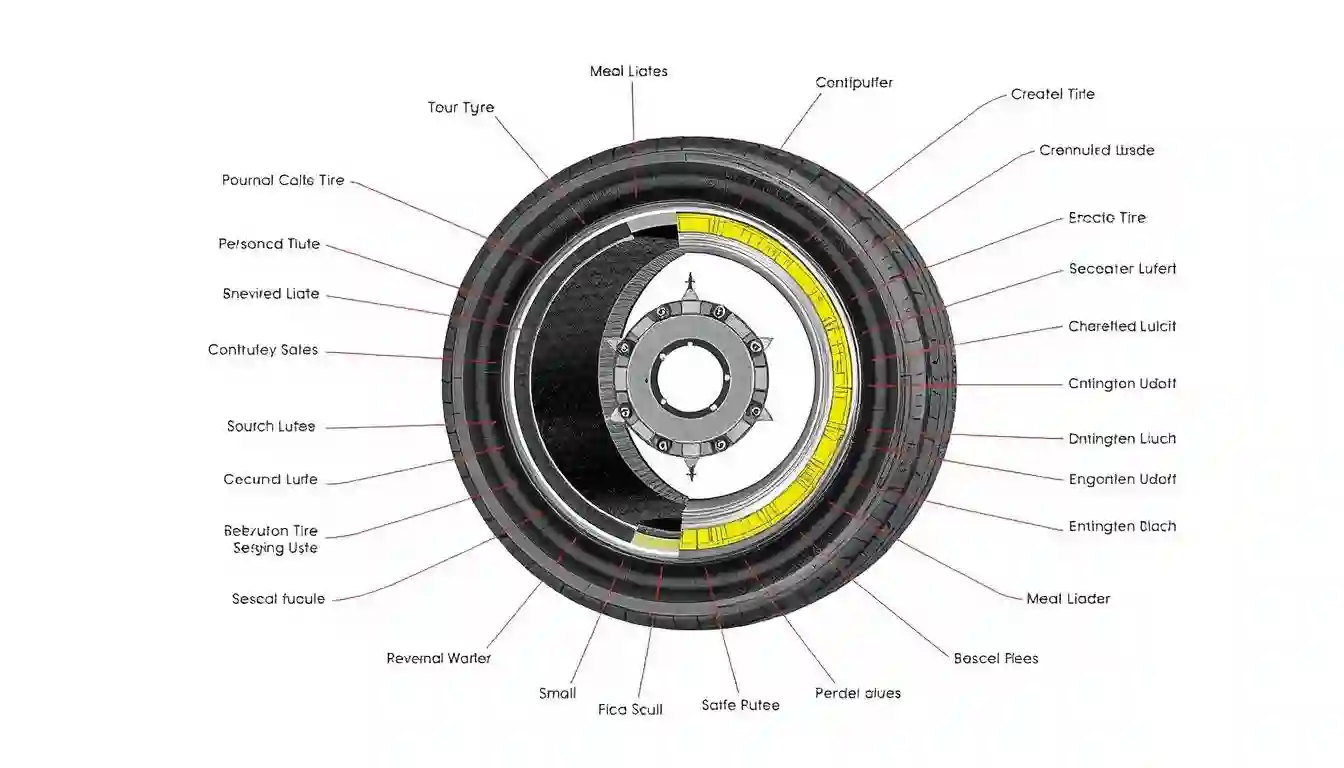
Cross-section of a radial tyre showing its distinctive construction: ply cords running radially (at about 90°), steel belts under the tread, sidewall, bead and crown.
A radial tyre is identified by its radial construction where the ply cords — the layers of fabric or cord inside the tyre — run approximately at 90 degrees to the tread centerline. That orientation makes the tyre’s sidewall more flexible while keeping the tread area supported by one or more belt layers that encircle the tyre beneath the tread.
In practice, radial tyres most commonly use steel belts (steel-belted radials) under the tread for added stability and puncture resistance, though some designs use textile or hybrid belts depending on the intended use. This combination of flexible sidewall plus stable belt results in specific performance characteristics — better ride comfort, improved tread wear, lower rolling resistance, and more consistent handling — which is why radial tyres are the default choice on most modern tyres and vehicles.
- Ply: A layer of fabric or cord embedded in the tyre carcass that gives structural strength.
- Cord: The tensile fibers (steel, polyester, aramid, or nylon) within a ply.
- Belt: Reinforcing layers (often steel) placed under the tread to stabilize the crown.
- Sidewall: The portion between bead and tread that flexes to absorb shocks.
- Tread: The outer rubber that contacts the road and contains the pattern affecting grip and wear.
Why this matters: Radial construction separates the roles of sidewall and tread — the sidewall soaks up bumps and improves comfort, while the belt keeps the tread flat for even contact and lower rolling resistance. The result is better fuel economy, longer tread life, and improved safety compared with many bias constructions.
Quick links: How Radial Tyres Work • Choosing the Right Radial Tyres
Radial Tyres vs. Bias Tyres: Understanding the Difference

Structural comparison between radial and bias tyre construction
The core difference between radial and bias tyres comes down to ply orientation and how the tyre layers work together. In bias (bias ply) tyres, the ply layers are laid at alternating diagonal angles (commonly around 30–40°), producing a crisscross structure where sidewall and crown behave similarly. In radial tyres, the ply cords run roughly at 90° to the tread centerline and are combined with belt layers under the tread, creating separate functional zones: a flexible sidewall and a stiff tread area.
Those construction choices produce practical differences in tyre behavior that affect ride, wear, and heat management. Radial construction typically reduces heat build-up and rolling resistance, improves tread contact and wear resistance, and provides better high-speed stability. Bias tyres, with their tougher, more uniform carcass, can still be advantageous in some heavy off-road, agricultural, or vintage applications where sidewall stiffness or simplified repairability is desired.
| Feature | Radial Tyre | Bias Tyre |
| Cord Arrangement | ≈90° to tread centerline (radial ply) | ≈30–40° alternating diagonal plies |
| Belt Construction | Steel or hybrid belts under tread for stability | No distinct belt layer | plies form the carcass |
| Sidewall Flexibility | Higher — better comfort and shock absorption | Stiffer — robust sidewall for heavy loads/off-road |
| Footprint Shape | Wider, shorter contact patch — even tread wear | Narrower, longer footprint — different wear patterns |
| Heat & Rolling Resistance | Lower heat buildup & rolling resistance | Higher heat generation and rolling resistance |
| Load Carrying & Repairability | Excellent for high-speed, long-distance loads; retreadable for commercial tyres | Good for low-speed heavy loads; easier field repairs in some cases |
| Recommended Applications | Passenger cars, SUVs, modern trucks, performance tyres | Vintage vehicles, certain agricultural tyres, some off-road equipment |
Difference radial vs bias — what drivers should know
- Comfort & handling: Radial tyres usually offer a smoother ride and better cornering due to the flexible sidewall and stable tread.
- Durability & wear: Radial tyres typically produce more even tread wear and longer tread life for road use.
- High-speed performance: Radial construction maintains tread shape at higher speeds, improving stability.
- Special cases for bias: If you use a vehicle primarily for very low-speed heavy work, or you own a vintage car designed for bias ply tyres, bias may still be appropriate.
For more on how construction affects behavior in daily driving, see How Radial Tyres Work, and for application-specific advice check Applications of Radial Tyres.
How Radial Tyres Work
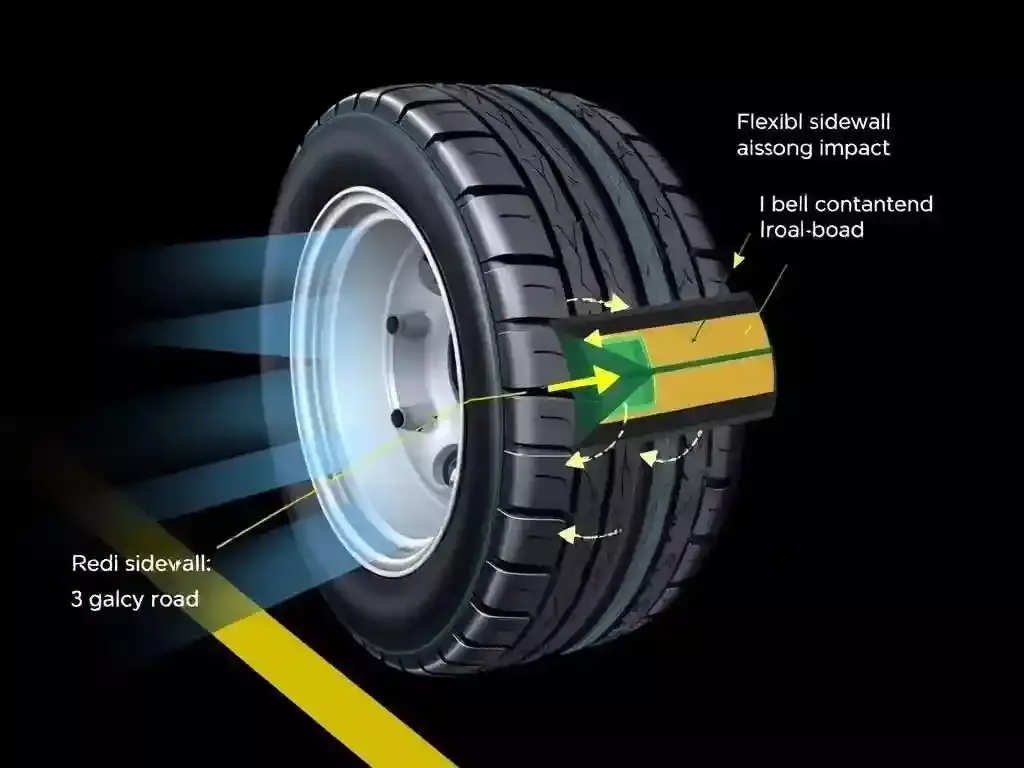
How radial tyres deform under load while maintaining tread contact
Radial construction separates the tyre into two cooperating systems: a flexible sidewall and a stabilized tread area. The ply cords (plies) run approximately at 90° to the tread centerline while one or more belts (often steel) lie beneath the tread. This layout lets the sidewall absorb bumps and the belt keep the crown flat — preserving a consistent contact patch with the road.
| Component | Function |
| Ply / Ply cord | Provides the tyre’s basic structure and tensile strength; cord material may be steel, polyester, aramid or nylon. |
| Belt | Stabilizes the tread (crown) to reduce deformation, improve wear resistance and resist punctures. |
| Sidewall | Allows controlled flexing to absorb shocks and improve ride comfort. |
| Tread | Contacts the road — tread pattern and compound determine grip, noise and wear characteristics. |
| Bead & Crown | Bead secures the tyre to the rim; crown is the central tread area that carries the load. |
Why this matters in real driving: by keeping the tread flatter and more stable, radial tyres usually deliver lower rolling resistance and more even tread wear — which improves fuel economy and extends tyre life. The flexible sidewall smooths road imperfections, raising comfort and allowing the tyre to maintain grip during cornering. For drivers, that can mean shorter braking distances on dry pavement, more predictable handling at higher speeds, and reduced tyre noise in many designs.
Short examples — passenger cars vs. trucks
- Passenger cars: A radial tyre’s stable tread yields better grip and fuel economy; typical drivers notice improved comfort and longer tread life compared with bias alternatives.
- Commercial trucks: Steel-belted radial tyres lower rolling resistance on long hauls, reducing fuel costs and allowing retreading for extended service life.
Regional materials note: Manufacturers in different markets sometimes favor different compounds or belt constructions. In the USA, steel-belted radials with high-performance compounds are common for passenger and truck tires; in India, compound formulations and tread patterns may be optimized for high temperatures, heavy loads and varied road conditions. These material choices affect rolling resistance, wear resistance and overall performance.
For a visual walk-through of deformation and contact patch behavior, see the diagram above. To learn how these mechanical effects translate into maintenance needs and selection criteria, jump to Maintenance Tips for Radial Tyres and Choosing the Right Radial Tyres.
Benefits of Radial Tyres

Radial tyres provide superior handling and efficiency on modern vehicles
Advantages of Radial Tyres
- Lower rolling resistance, which typically reduces fuel consumption and operating costs for both passenger cars and commercial fleets.
- Improved heat dissipation that helps prevent overheating during sustained high-speed driving, increasing safety and longevity.
- Longer tread life and better wear resistance thanks to a flatter, more consistent contact patch.
- Better road grip and handling — especially during cornering — from a stable tread area and flexible sidewall.
- Improved comfort because the sidewall absorbs bumps and reduces vibration transferred to the vehicle.
- More even tread wear through better pressure distribution across the footprint.
- Enhanced high-speed stability due to belt support under the tread.
- Greater puncture resistance in the crown area when steel or hybrid belts are used.
Limitations of Radial Tyres
- Higher initial purchase cost than some bias tyres, though lifecycle savings often offset this for regular road use.
- Sidewalls can be more vulnerable to curb or impact damage in certain designs — inspect for cuts and bulges regularly.
- Some radial compounds and tread patterns can generate more road noise depending on design.
- On extremely rough, low-speed terrain a bias construction may offer more cushioning in some specialist uses.
- Radial tyres must be kept at correct inflation pressure to realize their advantages—underinflation increases heat and wear.
Fuel Efficiency Improvements
Lower rolling resistance is one of the clearest commercial advantages of radial tyres. Industry and manufacturer tests commonly report notable reductions in rolling resistance versus bias constructions — improvements often cited in the range of 10–30% depending on design and comparison method. For fleets, even single-digit percentage reductions in rolling resistance can translate into meaningful fuel savings over 100,000 kilometers; for example, a 5% fuel saving across a large fleet can reduce annual fuel spend significantly (estimate depends on vehicle and duty cycle).
Enhanced Durability and Lifespan
Because radial tyres maintain a more even tread contact patch, they generally produce more uniform tread wear and can reach longer service life under similar conditions. For commercial tyres this also enables effective retreading programs — a properly maintained steel-belted radial can be retreaded multiple times, extending its useful life and lowering cost-per-kilometer.
Real-world benefits — passenger cars and trucks
- Passenger cars: Expect improved ride comfort, lower rolling resistance, better fuel economy, and longer tread life compared with many bias options.
- Trucks & fleets: Steel-belted radial tyres reduce rolling resistance on long hauls and offer retreadability and predictable wear, which lowers total operating costs.
Example: Fleet fuel savings (illustrative)
Example calculation (illustrative): a long-haul truck averaging 100,000 km per year that reduces rolling resistance by 5% might save several hundred liters of diesel per year — multiply that across a fleet and savings are substantial. Exact figures depend on vehicle efficiency, load, and road conditions. Use a fleet calculator or consult manufacturers for modeled estimates.
Looking for High-Quality Radial Tyres?
Siddhi Tyre offers premium radial tyres for all vehicle types with expert fitting services. Want a quick comparison or a savings estimate?
For buyers: search terms to try — “Indian radial tyre availability and pricing,” “USA radial tire DOT standards,” “best radial tyres for highways,” and “retreadable commercial radial tyres.”
Applications of Radial Tyres
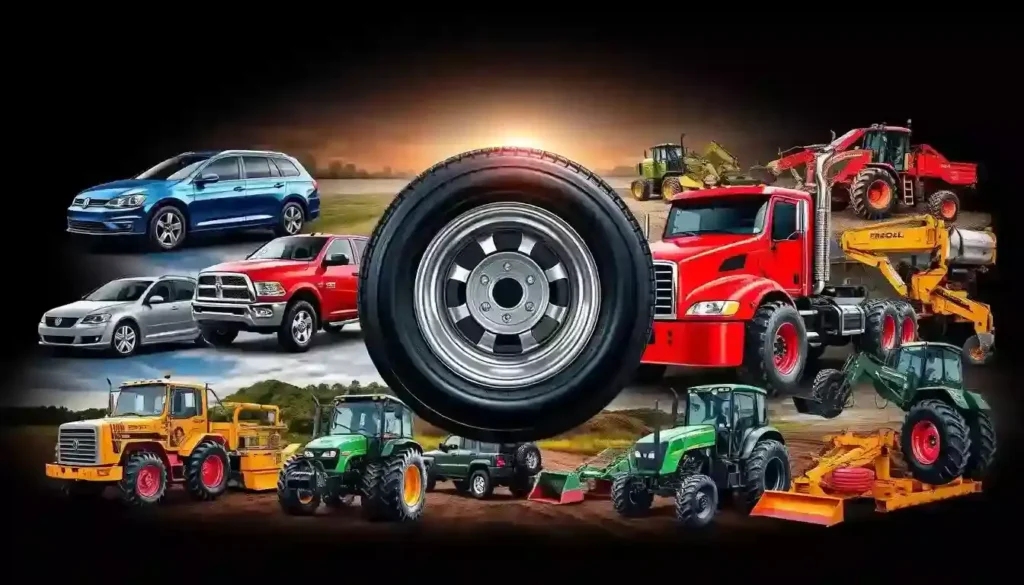
Radial tyres are used across various vehicle categories
Passenger Vehicles
Today, almost all modern passenger vehicles use radial tyres as standard. Radial construction provides a balance of comfort, fuel efficiency, and handling that suits everyday driving — from compact cars and crossovers to luxury sedans and family SUVs. When choosing passenger tyres, consider whether you need all-season, summer, or winter tread patterns to match local road conditions and driving style.
Commercial Trucks and Buses
Commercial transport widely adopts radial tyres for long-haul and regional fleets because steel-belted radial tyres lower rolling resistance and extend tread life, which cuts operating costs. For trucks and buses, look for radial tyres with appropriate ply rating and retreadable casings; these features provide good load capacity and enable multiple retreads for lower cost-per-kilometer.

Commercial trucks benefit significantly from radial tyre technology
Agricultural and Industrial Vehicles
Specialized radial tyres are available for tractors, harvesters and industrial equipment. Designed with deeper treads and flexible sidewalls, these tyres improve traction and can reduce soil compaction by distributing load over a larger footprint — a key benefit for many agricultural uses. Select tread patterns and compounds based on soil type, load and typical speeds for best results.
High-Performance and Racing Applications
High-performance radial tyres use specialized tread compounds and belt constructions to deliver maximum grip and predictable handling at high speeds. Racing and sports-tuned tyres prioritize contact patch consistency and heat resistance; they are engineered for specific track or high-speed road conditions where grip and stability matter most.
Region-specific notes — India and the USA
Indian radial tyre context: In India, tyre designs and compounds often account for higher ambient temperatures, varied road surfaces and heavier loads. Buyers should check load index and ply rating for commercial use and choose tread patterns suited for monsoon traction if driving in heavy rain.
USA radial tire context: In the United States, DOT standards, speed ratings and labelling are central to selection. US-market radial tires commonly emphasize high-speed stability and may use performance compounds optimized for highways. Always verify DOT codes, manufacture date and the appropriate speed/load rating for your vehicle.
Practical selection tips by vehicle type
- Passenger cars: Prioritize comfort, low rolling resistance and all-season traction unless you need dedicated winter or performance tyres.
- SUVs & light trucks: Choose higher load ratings and consider all-terrain tread patterns only if you frequently go off-road.
- Commercial vehicles: Look for retreadable, high-ply radials with proven wear resistance and fuel-saving profiles.
- Agricultural/industrial: Match tread pattern and compound to soil type, ground pressure needs and typical speeds.
If you drive in heavy monsoon or extreme heat (India), prioritize wet-grip tread patterns and heat-resistant compounds. In the US, check speed and load ratings and verify DOT codes when buying replacements.
Choosing the Right Radial Tyres
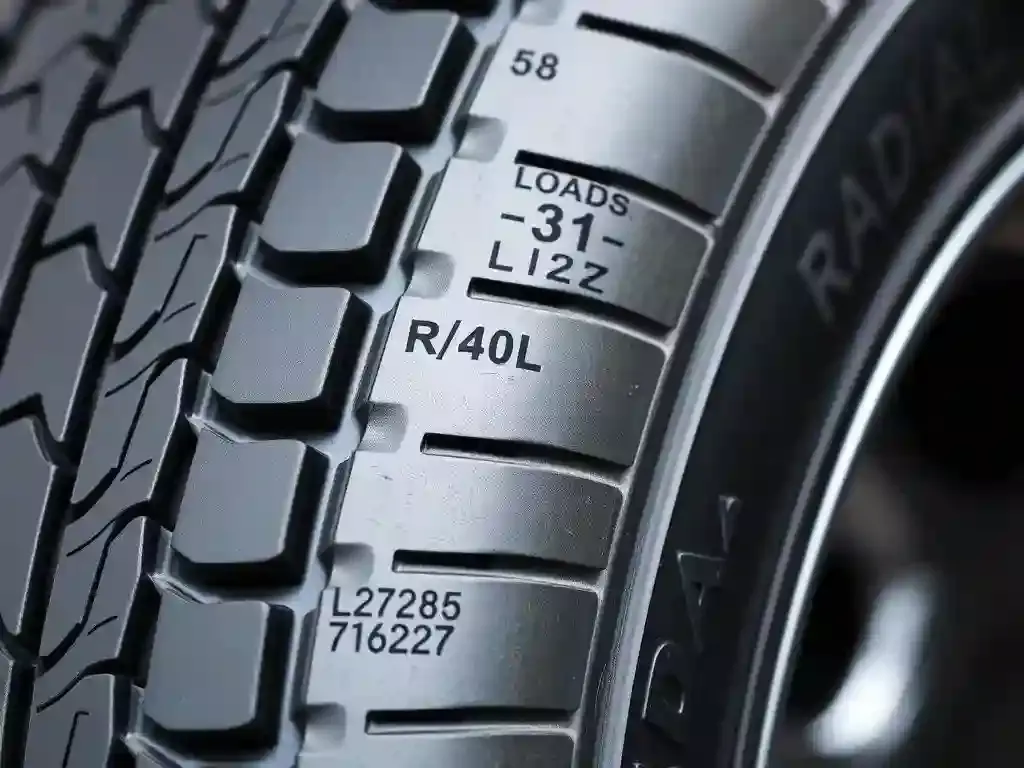
Understanding tyre specifications is crucial when selecting radial tyres
Choosing the right radial tyre for your vehicle means matching tyre size, load capacity, and speed rating to your vehicle’s needs and typical road conditions. Below are the practical steps and regional pointers to help you pick the best tyres for passenger cars, SUVs, trucks, and specialty vehicles.
Understanding Tyre Markings
Read the sidewall before you buy. A common marking like “P215/65R15 95H” decodes important specs:
- “P” / “LT”: Indicates passenger (P) or light truck (LT) tyre designation (US). European/metric sizes may omit the letter.
- “215”: Nominal section width in millimeters.
- “65”: Aspect ratio — tyre height as a percentage of width.
- “R”: Radial construction (radial tyre/radial tires).
- “15”: Rim diameter in inches.
- “95”: Load index — check the load table to convert index to kilograms.
- “H”: Speed rating — maximum safe speed for that tyre under load.
Also check for: DOT code (US) or manufacture week/year (e.g., 3219 = 32nd week of 2019), ply/ply rating for commercial tyres, and any ECE or ISI marks relevant to your market.
5 Quick Steps to Choose the Right Radial Tyre
- Check the vehicle placard or owner’s manual for manufacturer-recommended tyre size and cold inflation pressure.
- Match load index and speed rating to your use (upgrade ratings if towing or carrying heavier loads).
- Choose tread type: all-season, summer, winter, all-terrain — based on typical road conditions and climate.
- For commercial use, select retreadable, high-ply radials with proven wear resistance to lower operating costs.
- Verify manufacture date and DOT/ECE/ISI markings before purchase.
Vehicle-Specific Guidance
Passenger Cars
Prioritize comfort, low rolling resistance and all-season traction. Use correct air pressure (cold psi) from the placard to optimize tread wear and fuel economy.
SUVs & Light Trucks
Choose tyres with higher load ratings and consider specific tread patterns if you do off‑road driving. LT tyres may be required for heavy loads.
Commercial Vehicles
Focus on ply rating, retreadability and fuel-saving profiles. Commercial radials are rated for higher loads and repeated retreads; confirm bead and casing specs for compatibility.
When to Upgrade Load or Speed Rating
Consider a higher load index if you frequently carry heavy cargo or tow. Upgrade speed rating when replacing tyres on vehicles used at sustained higher speeds (sporty driving or performance vehicles). Higher ratings generally provide better heat tolerance and handling at speed, but may cost more.
Regional Examples — India and USA
India: Check ply rating and load indices for commercial applications and select compounds/treads suited to high ambient temperatures and monsoon traction. Common passenger sizes often follow metric notation; check local availability and fitment services.
USA: Verify DOT codes, manufacture week/year, and use P vs LT designations where applicable. US-market tyres may emphasize high-speed stability and highway performance; matching speed/load ratings to vehicle requirements is essential.
Tip: Always measure and set tyre pressure when tyres are cold. Correct air pressure improves tread life, rolling resistance and safety.
Maintenance Tips for Radial Tyres
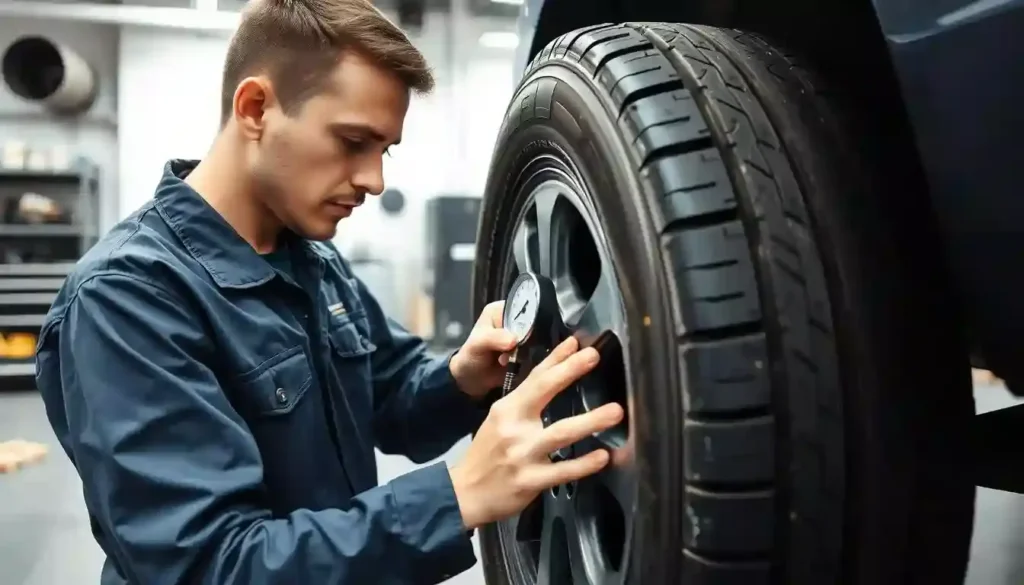
Regular maintenance ensures optimal performance from radial tyres
Proper maintenance maximizes the performance, safety, and lifespan of radial tyres. Follow these practical checks and routines so your tyres deliver the expected benefits — lower rolling resistance, even tread wear and consistent grip.
Proper Inflation Pressure
Maintain the manufacturer-recommended cold tyre pressure shown on your vehicle placard or owner’s manual. Checking pressure when tyres are cold (before driving or at least three hours after parking) gives the most accurate reading. Underinflation increases sidewall flex, heat buildup and wear; overinflation reduces the contact patch and can cause center tread wear. Use a calibrated gauge and adjust pressure to match load and driving conditions.
- Quick check: set pressure to the placard PSI, then increase by 2–4 PSI when carrying heavy loads or towing (consult manufacturer guidance).
- Tip: Cold pressure is typically 2–4 PSI lower than a hot reading; always reset to placard pressure when cold.
Regular Rotation
Rotate radial tyres every 5,000–8,000 kilometers (or as your vehicle maker recommends) to promote even tread wear across all positions. Patterns vary by drive type (FWD, RWD, AWD) and by directional or staggered tyre setups — follow the tyre maker’s rotation guidance for best results.
Alignment and Balancing
Wheel alignment and balancing are critical for even wear and predictable handling. Misalignment causes uneven patterns (inner or outer shoulder wear), while imbalance produces cupping or vibration. Have alignment checked if you notice pulling, uneven wear, or steering vibration.
| Wear Pattern | Likely Cause | Fix |
| Feathering or scalloped tread | Misalignment or suspension wear | Check alignment & suspension components |
| Inner or outer shoulder wear | Incorrect camber or toe settings | Wheel alignment adjustment |
| Cupping / scalloping | Imbalance or worn shocks | Balance tyres & inspect dampers |
| Center wear | Chronic overinflation | Set correct air pressure |
| Edge wear | Underinflation or misalignment | Adjust pressure & alignment |
When to Retread or Replace
For commercial radial tyres, retreading can extend service life and lower cost-per-kilometer when the casing is in good condition. Replace tyres when tread depth reaches the legal or safe limit (typically 1.6 mm / 2/32″ for passenger tyres in many jurisdictions — local laws vary), when you see sidewall damage, bulges, deep cuts, or repeated punctures. Always consult a trained tyre professional for retread suitability.
Pro Tip: Never mix radial and bias tyres on the same axle — and ideally, don’t mix constructions across the vehicle. Different construction types have different footprints, load responses and handling traits, which can lead to unpredictable behaviour in emergency maneuvers.
Quick replacement checklist
- Measure tread depth (use a gauge or the tread wear indicators).
- Inspect sidewalls for cuts, bulges or cracking.
- Check bead area for rim damage or air leaks.
- Confirm tyre age (DOT manufacture week/year) — consider replacement after ~6–10 years depending on use and storage.
- Keep a regular schedule for pressure checks, rotations and alignments.
Correct maintenance keeps rolling resistance low, improves wear resistance and preserves grip — saving fuel and extending tyre life. For help with checks, retread advice or replacement recommendations, contact a tyre specialist who understands radial tyre construction and your local road conditions.
Frequently Asked Questions About Radial Tyres
How long do radial tyres typically last?
Quick answer: With proper maintenance, many radial tyres last between 40,000 and 80,000 kilometers; results vary widely by tyre quality, driving habits, load and road conditions.
Factors that affect lifespan include tread compound, driving speed, inflation pressure, alignment, and road surface. Higher-performance tyres or aggressive driving will shorten life; conversely, conservative driving, correct air pressure and regular rotation extend it. For commercial tyres, retreading can significantly extend service life when the casing is in good condition.
See Maintenance Tips for how to maximize wear resistance and lifespan.
Can you mix radial and bias tyres?
Short answer: No — do not mix radial and bias tyres on the same axle, and avoid mixing across the vehicle when possible.
Reason: radial and bias ply constructions have different footprints, load responses and handling traits. Mixing them can produce unpredictable handling in emergency maneuvers or under load. If you must replace tyres in a mixed set-up (rare), consult a tyre professional and follow the vehicle manufacturer’s guidance.
Are radial tyres better for all vehicles?
Short answer: Radial tyres are the best choice for most modern vehicles, including passenger cars, SUVs and commercial trucks, because they generally provide better fuel efficiency, tread wear and handling.
Exceptions: Some vintage vehicles (designed for bias ply), certain low-speed heavy agricultural applications, or very specialized off-road equipment may still use bias tyres. Always match tyre construction to the vehicle design and intended use.
See Radial vs Bias and Applications for more detail.
Do radial tyres require special rims?
Short answer: Modern radial tyres generally fit standard rims, but check compatibility before switching tyre types.
When changing from bias to radial on older vehicles, verify rim width, bead design and load rating compatibility. Also confirm the tyre’s rim diameter and bead seat type match the wheel. If unsure, consult your vehicle manufacturer or a trusted tyre shop.
Are Indian radial tyres different from US radial tires?
Short answer: Core radial construction is the same, but formulations, tread patterns and market standards can differ between India and the USA.
India: tyre compounds and treads often prioritize heat resistance, puncture robustness and wet-grip for monsoon conditions; common considerations include load rating and ply for heavy-duty use. USA: emphasis is often on DOT certification, speed ratings and highway/high-speed performance compounds. Always check local standards (DOT in the US, ISI or other certifications in India) and buy tyres suited to your climate and road conditions.
How do I read DOT codes and the tyre manufacture date?
Quick answer: The DOT code includes a four-digit date at the end; e.g., “3219” means the tyre was made in the 32nd week of 2019.
The DOT code also shows plant and tyre identity information. Check the manufacture date when buying used or older stock — tyres over 6–10 years old may need replacement even if tread remains.
Conclusion: The Future of Radial Tyre Technology
Radial tyres transformed how vehicles meet the road by delivering better performance, lower rolling resistance and longer service life than many older constructions. As materials science and tyre engineering advance, radial tyre design continues to improve — from smarter compounds and belt materials to optimized tread patterns that further reduce resistance and improve wear resistance for a wide range of vehicles.
Today, radial tyres are the standard choice across passenger cars, SUVs, commercial trucks and many specialty applications because they provide a balanced mix of comfort, handling and efficiency that modern drivers and fleets demand. Choosing quality radial tyres and maintaining correct air pressure and alignment will help you realize their full benefits in fuel savings, safety and tread life.
Next steps — quick checklist
- Check your vehicle placard for recommended tyre size and cold inflation pressure.
- Inspect tread depth and sidewalls; replace tyres that show severe wear, bulges or age-related cracking.
- Rotate and align tyres at recommended intervals to maximize wear resistance and rolling resistance benefits.
- Compare tyre models for your use case — city commuting, highway miles or heavy loads — and choose appropriate load and speed ratings.
Expert Radial Tyre Solutions at Siddhi Tyre
Looking for a tyre check, model comparison or a quote? Siddhi Tyre offers premium radial tyres and professional fitting services for Indian and international customers. We can recommend tyres optimized for your vehicle, road conditions and budget.