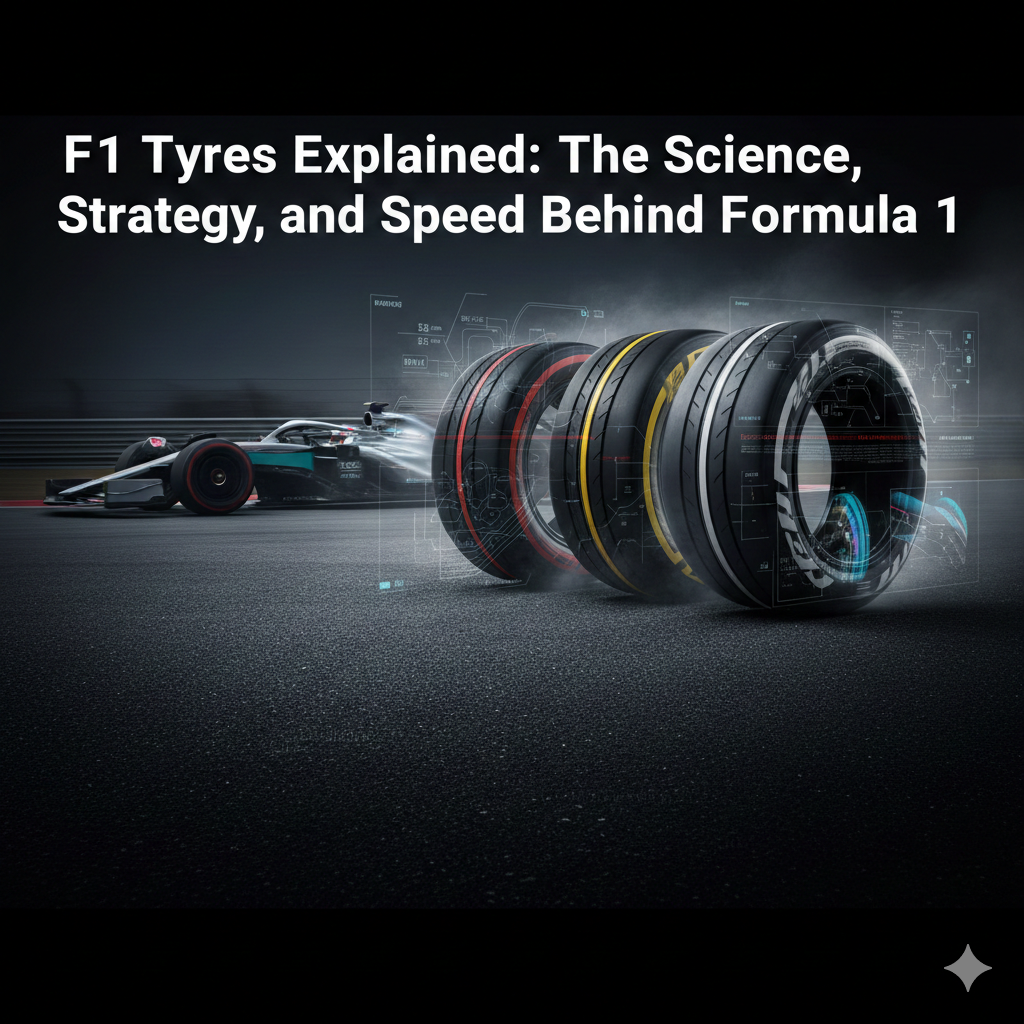
In the high-octane world of Formula 1, races are won by milliseconds, but championships are often decided by black rubber circles. While the engine provides the power and the aerodynamics provide the grip, the F1 tyre is the single point of contact transferring all that engineering to the track.
Understanding F1 tyres is not just for the engineers; it is the key to unlocking the drama of every Grand Prix. From the “undercut” strategy to managing degradation, tyres are the variables that turn a procession into a thriller.
This guide dives deep into the complex world of Formula 1 tyres—explaining the compounds, the rules, and why they are the most critical component on the car.
The Sole Supplier: Pirelli’s Role in F1
Since 2011, the Italian tyre giant Pirelli has been the sole tyre supplier for Formula 1. Unlike road car tyres designed to last for tens of thousands of kilometers, an F1 tyre is an extreme engineering marvel designed to withstand immense G-forces and temperatures for just a fraction of that distance.
Pirelli’s mandate is tricky: they must create tyres that are safe and fast, but also degrade (wear out) fast enough to force teams into pit stops, adding strategic variety to the race.
Decoding the Rainbow: Understanding F1 Tyre Compounds
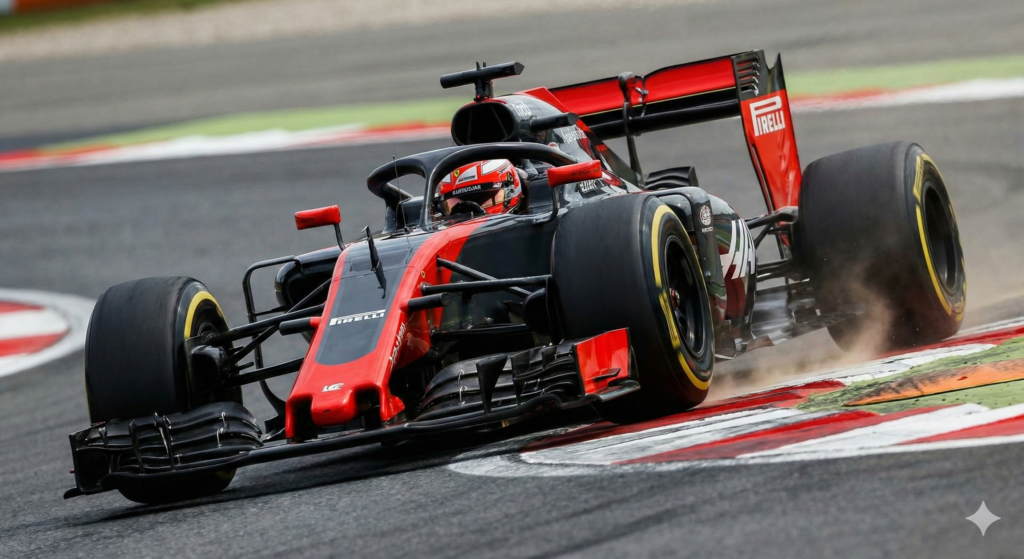
For every race weekend, Pirelli brings a specific selection of dry-weather “slick” tyres and wet-weather grooved tyres. To make it easy for fans to follow, they are color-coded.
1. The Slick Tyres (Dry Weather)
These tyres have no tread pattern (grooves). This maximizes the contact patch with the road, providing immense mechanical grip. There are five compounds in Pirelli’s range (C1 being the hardest, C5 the softest), but only three are chosen for each race:
- 🔴 The Soft (Red Sidewall): The fastest tyre with the most grip. It warms up quickly but wears out the fastest. Used primarily for Qualifying and aggressive race starts.
- 🟡 The Medium (Yellow Sidewall): The “Goldilocks” tyre. It offers a balanced compromise between speed and durability. It is the core race tyre for most strategies.
- ⚪ The Hard (White Sidewall): The slowest to warm up but the most durable. Drivers use this for long stints to avoid making an extra pit stop.
2. The Grooved Tyres (Wet Weather)
When the heavens open, slicks become dangerous “aquaplaning” sleds. F1 cars switch to treaded tyres that evacuate water:
- 🟢 Intermediate (Green Sidewall): For damp tracks or light rain. It can clear roughly 30 liters of water per second at full speed.
- 🔵 Full Wet (Blue Sidewall): For heavy rain. These have deep grooves and can evacuate a staggering 85 liters of water per second.

The Dark Art of Tyre Management
You often hear engineers on the radio telling drivers to “look after the tyres.” Why?
Thermal Degradation
F1 tyres have a narrow operating window (usually between 100°C and 110°C). If a driver pushes too hard, the tyre overheats. The rubber essentially “cooks,” losing grip and sliding more, which generates even more heat—a vicious cycle known as thermal degradation.
Graining and Blistering
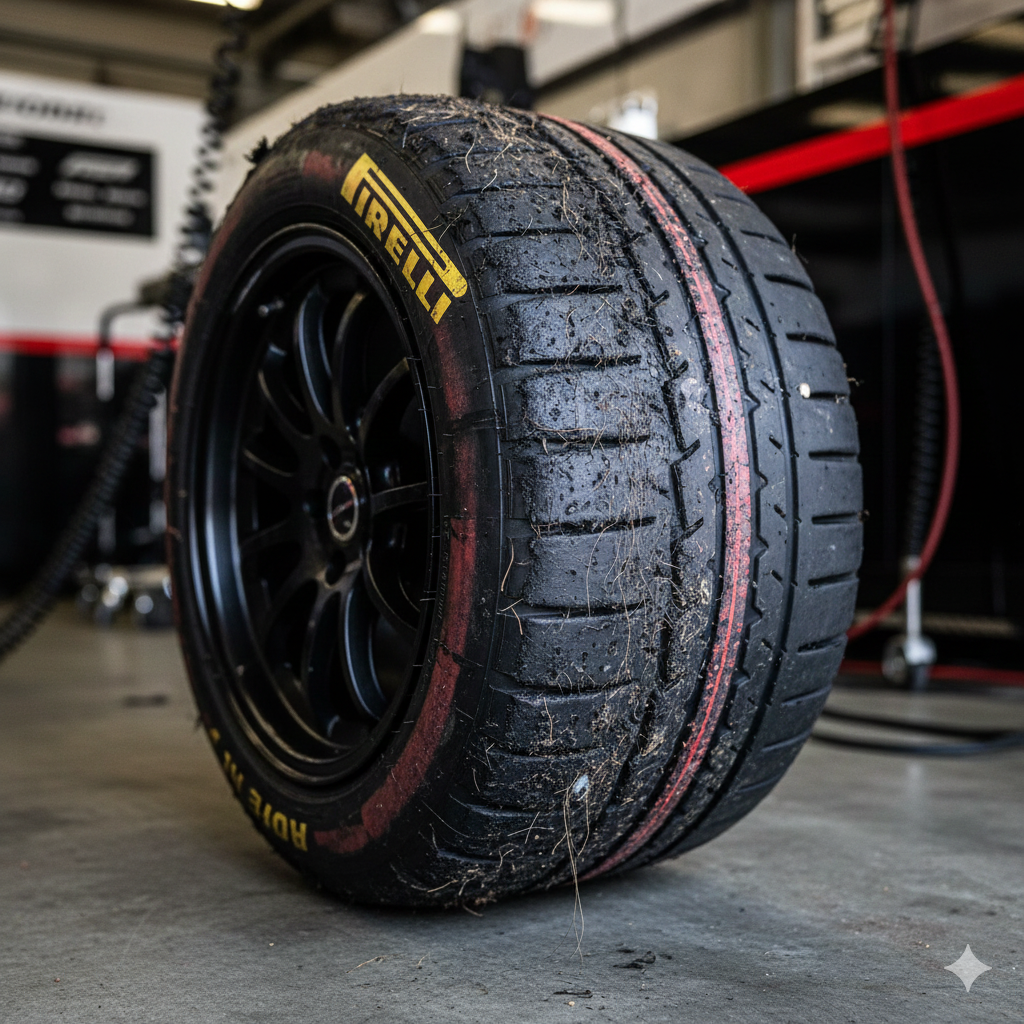
- Graining: Bits of rubber tear off and stick back onto the tyre surface, reducing grip like running on marbles.
- Blistering: The inside of the tyre gets so hot that pockets of steam explode through the rubber, leaving craters on the surface.
Drivers like Lewis Hamilton and Max Verstappen are masters of driving fast without overheating their rubber, a skill that separates champions from the rest.
The Pit Stop Strategy: Undercut vs. Overcut
Tyres dictate the race strategy. Teams have two main moves:
- The Undercut: A driver stuck behind a rival pits early for fresh tyres. The new rubber allows them to drive much faster immediately. By the time the rival pits a lap or two later, they come out behind the first driver.
- The Overcut: Used when tyre degradation is low. A driver stays out longer on old tyres, hoping the rival who pitted early gets stuck in traffic or struggles to warm up their new rubber.
New Era: 18-Inch Low Profile Tyres
In 2022, F1 underwent a massive revolution, switching from the traditional 13-inch balloon tyres to 18-inch low-profile tyres.
- Why the change? The new tyres look more like modern road car wheels and are more relevant to the automotive industry.
- The Impact: They have stiffer sidewalls, meaning less “bouncing” and more precise aerodynamic airflow, but they are heavier and change how the suspension reacts over curbs.
Conclusion
The F1 tyre is a technological masterpiece that balances on a knife-edge of performance and destruction. It is the variable that keeps teams awake at night and keeps fans glued to the screen. Next time you watch a Grand Prix, look past the wings and engines—watch the coloured sidewalls. That is where the race is truly being won.
Need advice on road tyres for your car? Contact our experts directly:
- 📲 WhatsApp: Chat with an Expert on WhatsApp
- 📞 Phone: Prefer calling? Call +91 90822 61908
- 🌐 Website: Explore our full range: Visit siddhityre.com
- 🏢 IndiaMART: Find us on IndiaMART: Siddhi Tyre IndiaMART Profile