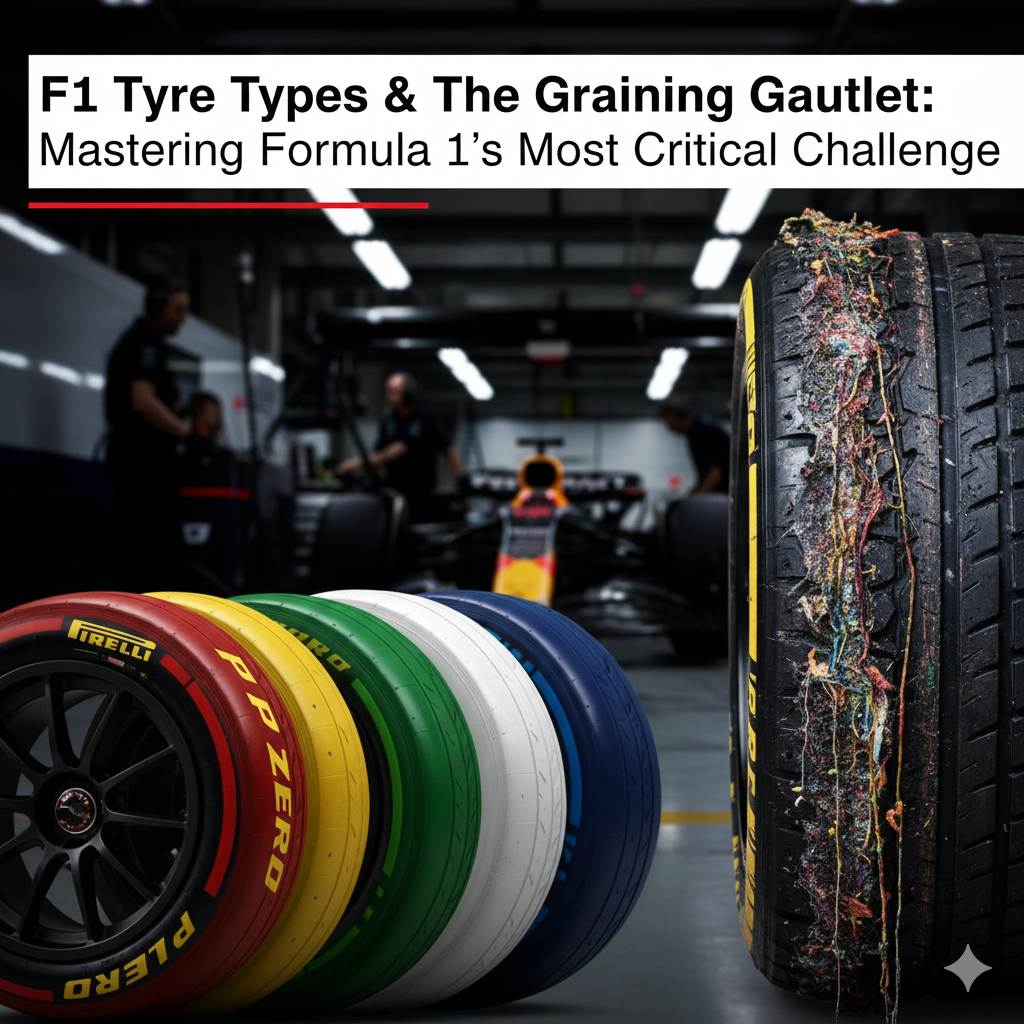
In the relentless pursuit of speed, Formula 1 cars are marvels of engineering. But all that power, downforce, and precision ultimately translates to the track through four patches of contact: the tyres. Far from simple rubber, F1 tyre types are complex, highly specialized components that define strategy, performance, and often, the outcome of a Grand Prix.
Yet, even the most advanced compounds are susceptible to a phenomenon that can derail a race: F1 tyre graining. This subtle but critical form of degradation is a silent enemy, eroding grip and costing precious seconds.
This comprehensive article will dive deep into the diverse world of F1 tyre types and unravel the science behind graining, exploring why it happens, its impact on racing, and how teams and drivers attempt to conquer this perennial challenge.
Understanding F1 Tyre Types: The Pirelli Rainbow
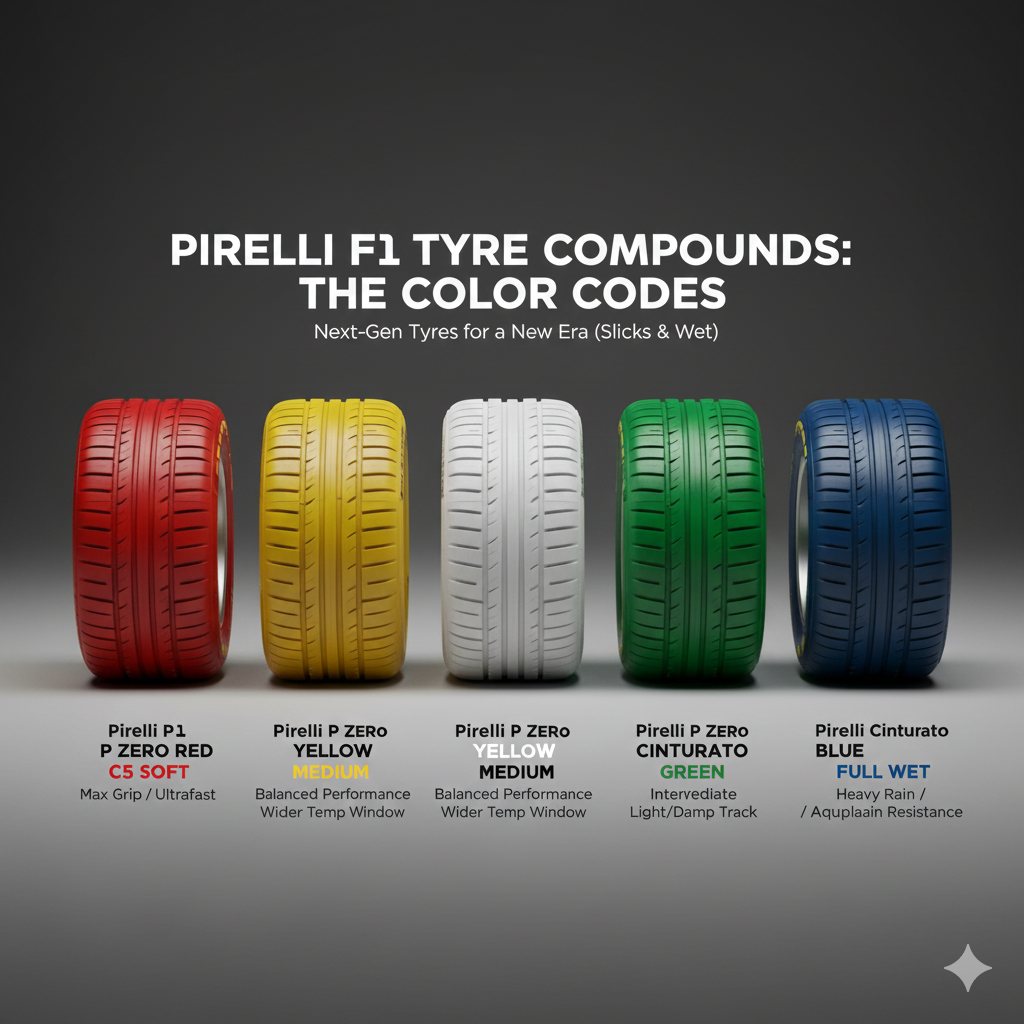
Since 2011, Pirelli has been the sole tyre supplier for Formula 1, tasked with creating tyres that are not only incredibly fast but also strategically challenging due to their controlled degradation. They offer various “types” to suit different track conditions.
1. Dry Weather Tyres (Slicks)
Slick tyres have no tread pattern, maximizing the contact patch for ultimate grip on dry asphalt. Pirelli’s range comprises five distinct compounds, from hardest (C1) to softest (C5). For each race weekend, Pirelli selects three of these to be designated as:
- 🔴 The Soft (Red Sidewall):
- Characteristics: Highest grip, fastest warm-up.
- Usage: Ideal for qualifying bursts, race starts, or short, aggressive stints when maximum performance is needed.
- Downside: Highest degradation rate, most prone to overheating.
- 🟡 The Medium (Yellow Sidewall):
- Characteristics: A balanced compromise between grip and durability.
- Usage: The versatile workhorse for race stints, offering good performance without excessive degradation.
- Downside: Not as quick as the Soft, not as durable as the Hard.
- ⚪ The Hard (White Sidewall):
- Characteristics: Lowest grip, slowest to warm up, but highly durable.
- Usage: Used for long race stints to minimize pit stops, often for strategic plays or when track temperatures are extremely high.
- Downside: Slower lap times compared to softer compounds, especially initially.
2. Wet Weather Tyres (Grooved)
When rain hits the track, slicks are replaced with grooved tyres designed to evacuate water and prevent aquaplaning.
- 🟢 Intermediate (Green Sidewall):
- Characteristics: Features a moderate tread pattern.
- Usage: Perfect for damp tracks, light rain, or when the track is drying. Can evacuate approximately 30 litres of water per second at full speed.
- 🔵 Full Wet (Blue Sidewall):
- Characteristics: Deepest grooves and softest compound.
- Usage: For heavy rain and standing water. Can clear up to 85 litres of water per second at full speed, crucial for visibility and grip in extreme conditions.
The Silent Killer: What is F1 Tyre Graining?
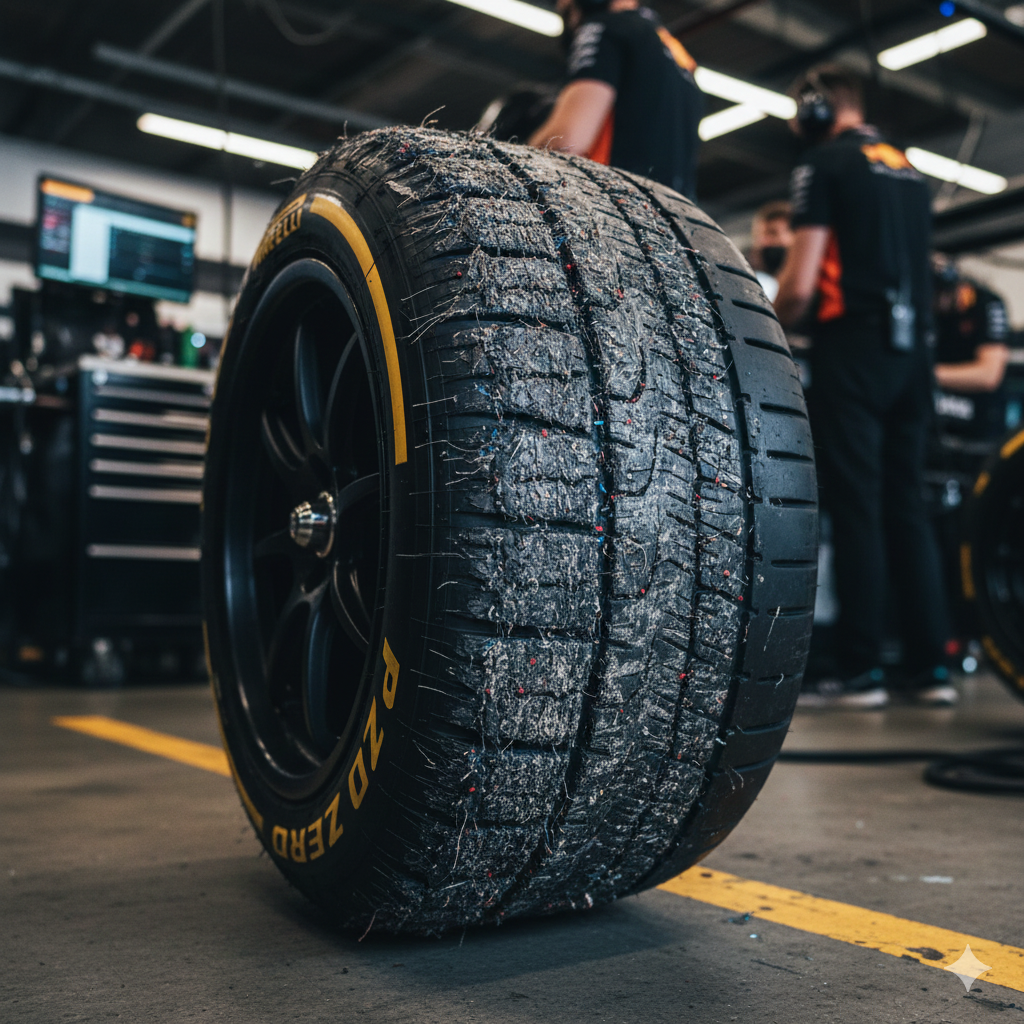
Beyond simply “wearing out,” F1 tyres face a more insidious form of degradation known as graining. This occurs when the tyre slides excessively across the track, causing small pieces of rubber to tear away from the main tyre surface. Instead of cleanly being shed, these pieces then stick back onto the leading edge of the tyre, forming a rough, textured surface.
Why Does Graining Happen?
Graining is primarily a thermal phenomenon, often triggered by a combination of factors:
- Low Track Temperatures: When the track is cold, the tyre struggles to reach its optimal operating temperature. The rubber remains too stiff and cannot flex properly, leading to micro-tears and graining as it slides.
- Aggressive Driving Style: Harsh braking, aggressive turn-in, and excessive wheelspin cause the tyre to slide more, generating localized heat and mechanical stress that promotes graining.
- High Downforce with Low Grip: In situations where a car generates a lot of aerodynamic downforce but the track itself offers poor grip (e.g., a new asphalt surface), the tyre is heavily loaded but can’t “bite” efficiently, leading to sliding and graining.
- Improper Tyre Pressure/Setup: Incorrect tyre pressures or sub-optimal suspension geometry can cause the tyre to load unevenly, exacerbating graining.
- Following Other Cars Closely: Driving in dirty air robs the car of downforce, making the tyres slide more and heat up faster.
The Detrimental Impact of Graining
The consequences of graining are immediate and severe:
- Reduced Grip: The rough, ‘grainy’ surface doesn’t make smooth, consistent contact with the track. It effectively reduces the effective contact patch, leading to a significant loss of overall grip.
- Lap Time Loss: With less grip, the car cannot carry as much speed through corners, resulting in slower lap times.
- Overheating: The sliding and tearing action generates additional heat, further pushing the tyre out of its optimal operating window and accelerating thermal degradation.
- Accelerated Wear: Graining causes the tyre to wear out much faster than intended, forcing earlier pit stops and compromising strategy.
Conquering Graining: Driver Skill & Team Strategy
Combating graining is a multi-faceted challenge requiring both driver finesse and engineering ingenuity.
Driver Techniques:
- Gentle Initial Laps: Drivers often “manage” their tyres in the early laps of a stint, driving more smoothly to bring them up to temperature gradually and avoid initial graining.
- Smooth Inputs: Avoiding sudden braking, aggressive steering, or violent acceleration helps minimize tyre sliding.
- Driving Style Adaptation: Some drivers are naturally smoother and more adept at preventing graining than others.
Team Strategy & Setup:
- Optimal Car Setup: Adjusting suspension stiffness, camber, toe, and ride height can influence how the tyre loads and wears, helping to mitigate graining.
- Tyre Pressure Management: Precise tyre pressure settings are crucial to ensure even contact and heat distribution across the tyre surface.
- Compound Choice: Teams might opt for a harder compound if they anticipate graining will be a major issue, even if it means slightly slower initial pace.
- Heating Blankets: Tyres are pre-heated in electric blankets before being fitted to help them reach their operating window faster on track.
Beyond Graining: Other Forms of Degradation
While graining is a specific form of degradation, it’s often linked to other tyre issues:
- Blistering: Occurs when the internal temperature of the tyre gets too high, causing the rubber layers to separate and form bubbles or craters on the surface.
- Thermal Degradation (“The Cliff”): A general term for when the tyre overheats and its performance dramatically drops, often very suddenly – drivers refer to this as falling off “the cliff.”
Conclusion: The Unseen Battle
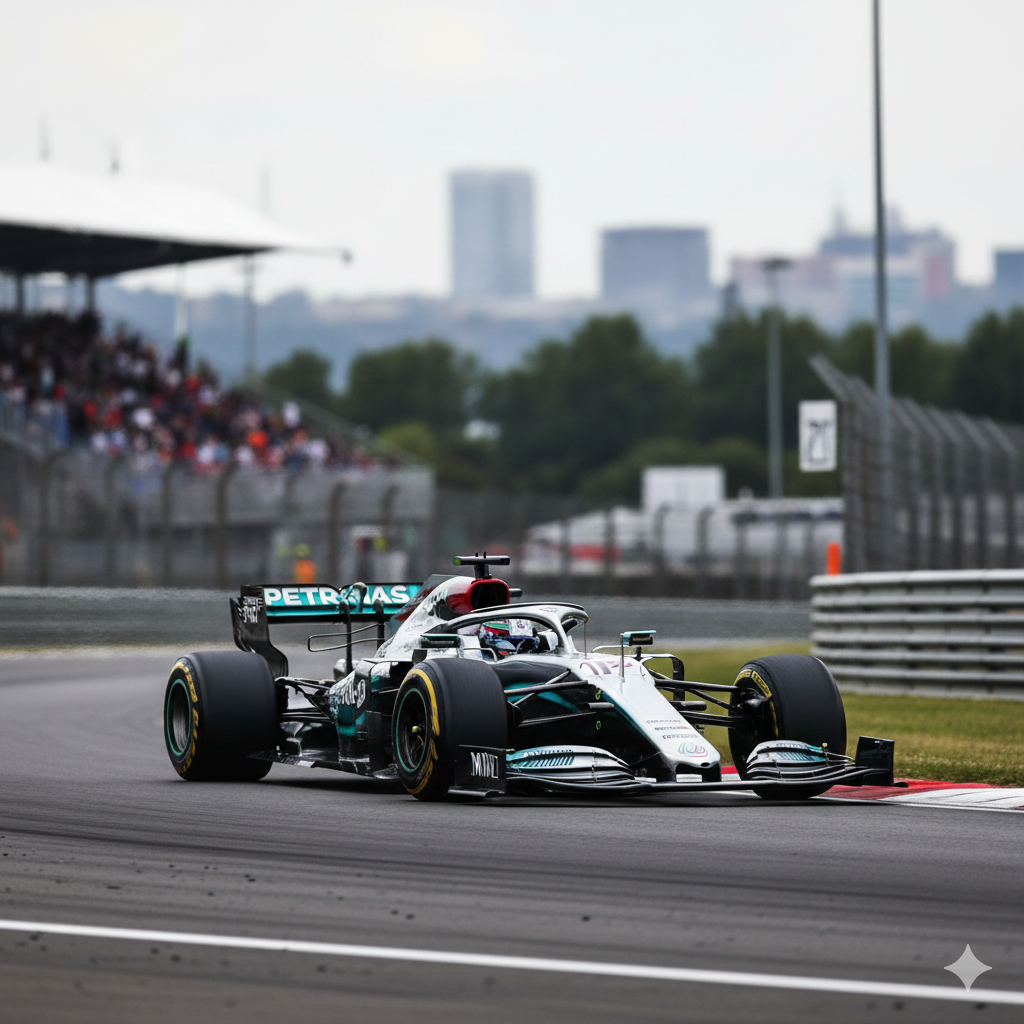
The interplay between F1 tyre types and the ever-present threat of tyre graining is a central theme in Formula 1. It transforms what seems like a simple component into a complex strategic variable. From the pit lane to the final lap, the battle against graining and degradation is a testament to the supreme skill of drivers and the relentless innovation of engineers.
Understanding these dynamics doesn’t just make you a more informed fan; it deepens the appreciation for every strategic decision, every subtle steering input, and every hard-fought victory on the track.