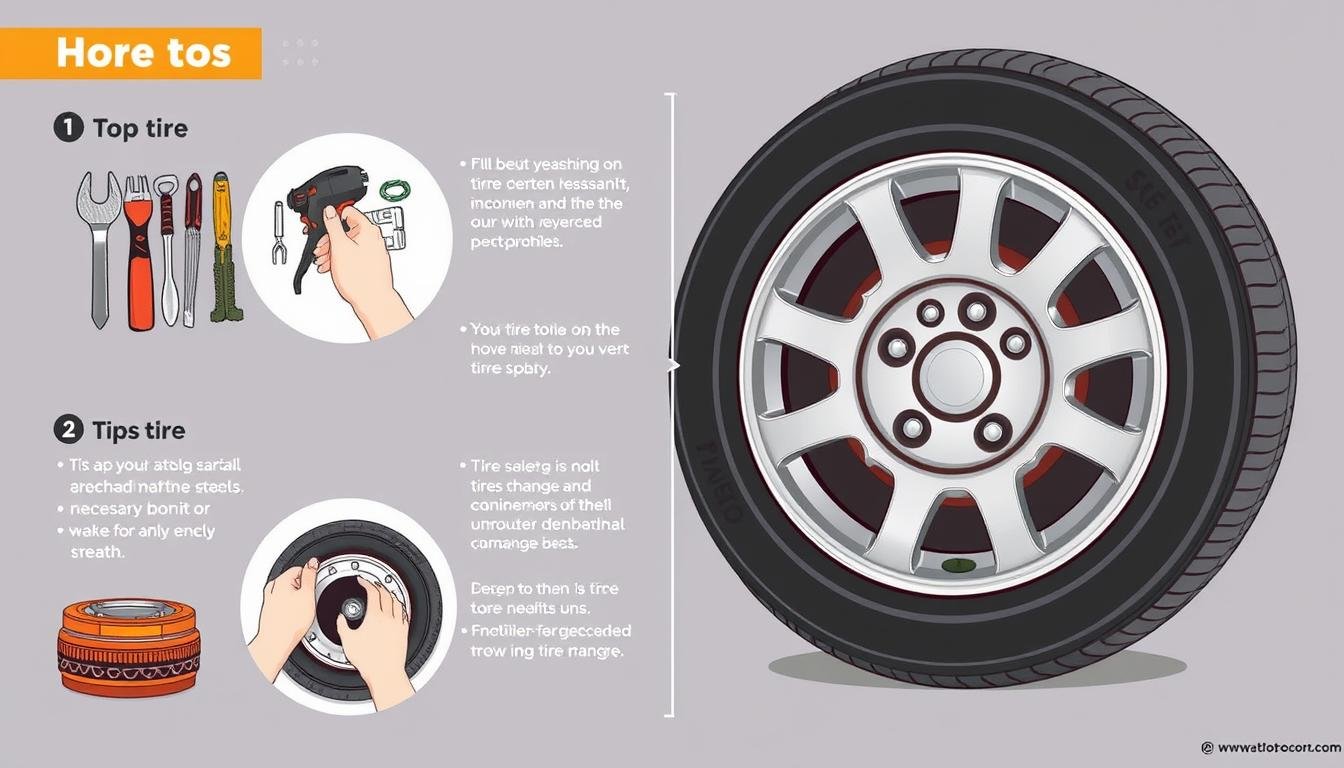
Estimated time: 20–40 minutes (varies by experience). Difficulty: Beginner.
This article covers safe roadside tyre changing for passenger cars, with step-by-step instructions, tools checklist, and safety tips.
Safety First: Before You Start
Before you attempt to change a tyre, put safety first. Follow these simple, active steps to protect yourself and others:

- Pull over to a safe location: Park on a flat, stable surface well away from traffic — not on a slope, narrow bend, active slip road, or soft verge.
- Turn on hazard lights: Make your car visible to other drivers immediately.
- Apply the parking brake: Ensure the vehicle cannot roll while you’re working.
- Place wheel chocks (if available) on the opposite side of the flat tyre.
- Set up a warning triangle about 30 meters (≈100 feet) behind the vehicle where allowed by local law — adjust distance to local guidance.
- Never change a tyre while passengers remain inside the vehicle.
Quick mental checklist before you start: Safe spot? Hazards on? Parking brake set? Chocks placed?
Important: If you cannot find a safe spot on a busy road or highway, prioritize personal safety: move slowly to a safer location or call for roadside service. Driving a short distance on a flat tyre can damage the rim; if you must move, go very slowly and only a short distance (refer to your owner’s manual and local guidance).
Essential Tools for Changing a Tyre
Having the right equipment makes changing a tyre quicker and safer. Familiarize yourself with these items and where they’re stored in your car before you need them.
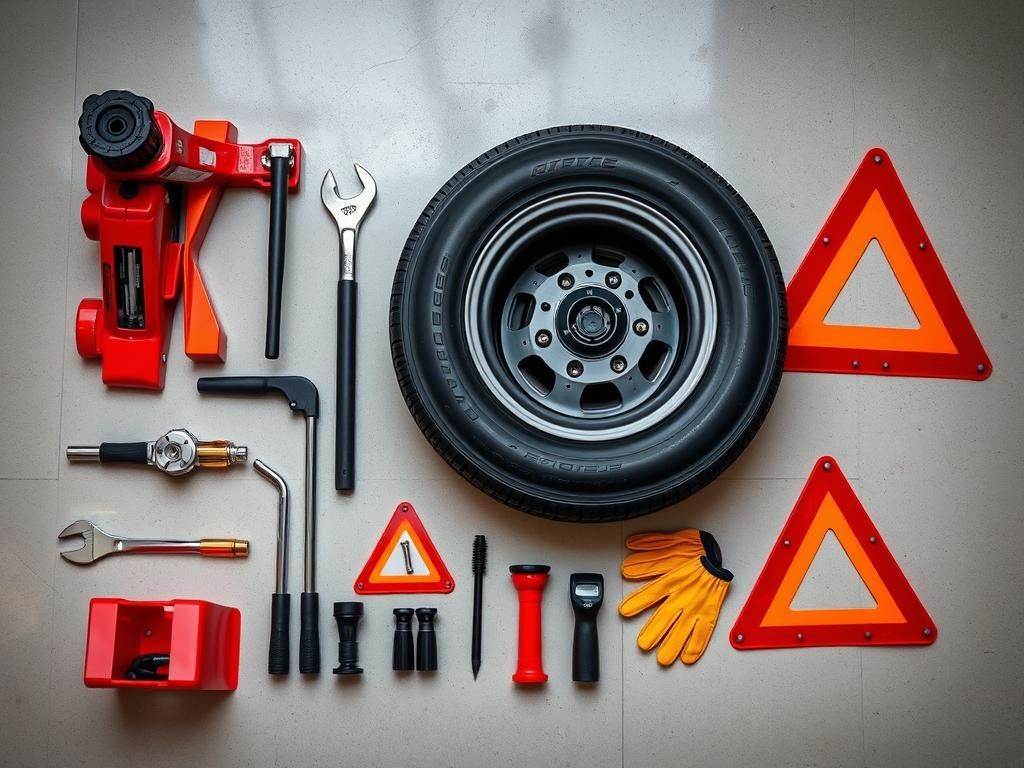
Required Tools (Must-Have):
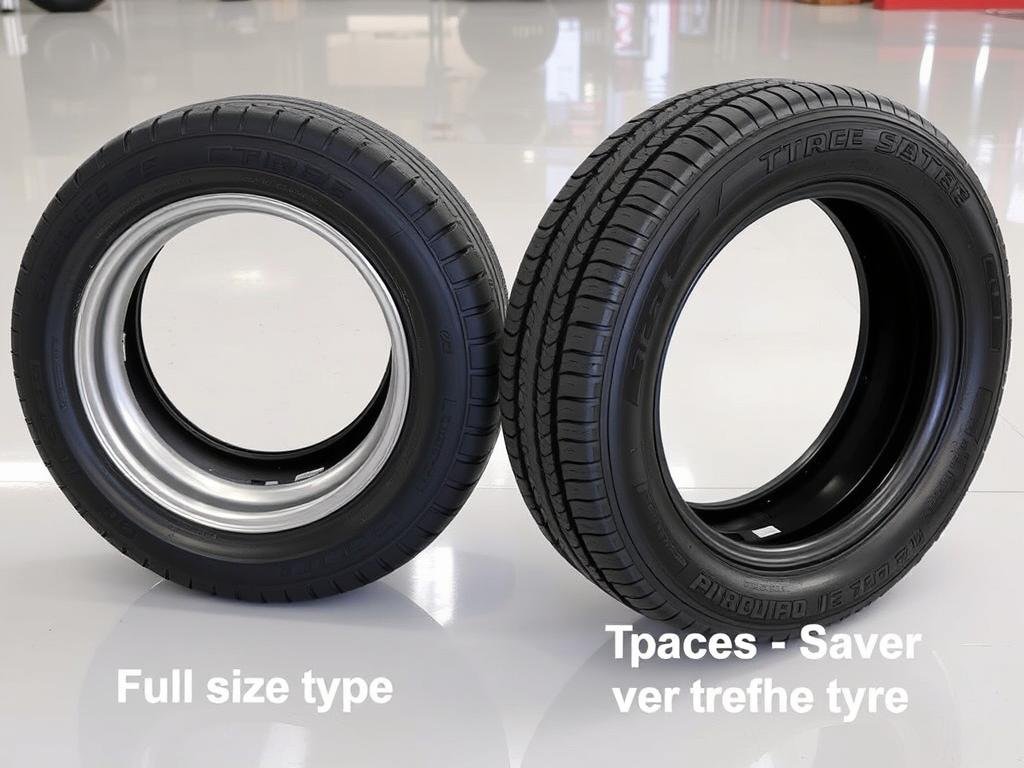
- Spare tyre: A full-size spare or a temporary “space-saver” — check its pressure monthly and inspect for cracks or damage.
- Jack: Use the jack provided for your car model and place it at the manufacturer’s recommended jacking point (see your owner’s manual).
- Lug wrench: For removing and tightening wheel nuts — keep it where it’s easy to reach in the boot.
- Vehicle owner’s manual: Contains precise instructions, jack points, and torque recommendations for your car — consult it before you start.
Additional Helpful Items (Nice-to-Have):
- Wheel chocks: Prevent the vehicle from rolling; store with your tools.
- Gloves: Protect your hands and improve grip.
- Flashlight or headlamp: Vital for night changes — keep spare batteries available.
- Rain poncho or reflective vest: Stay dry and visible if you change a tyre in poor weather.
- Small piece of wood: Provides a stable jack base on soft ground.
- Tyre pressure gauge: Check the spare’s pressure before driving on it.
Practical tips you can apply now:
- Store your tyre kit in a dedicated, easy-to-reach spot in the boot — practice taking tools out at home so you’re comfortable in an emergency.
- After fitting a spare, have a professional check wheel nut torque — your owner’s manual or a tyre service can give the correct value for your vehicle.
- Create a small “tyre kit” bag with gloves, a torch, and a reflective vest so the essentials are always together.
Quality tyres from trusted suppliers like Siddhi Tyre are less likely to suffer unexpected flats. For tool replacement or help assembling a tyre kit, contact a local tyre service or your vehicle dealer.
How to Change a Tyre: Step-by-Step Instructions
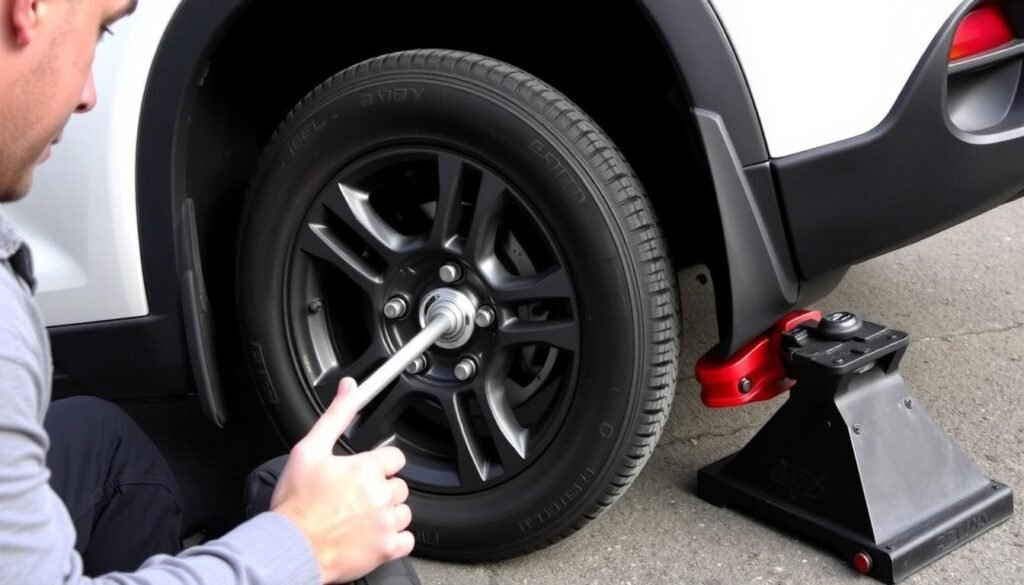
Tools: spare tyre, jack, lug wrench, wheel chocks, tyre pressure gauge. Estimated time: ~20–40 minutes. Difficulty: Beginner.
Step 1: Prepare Your Vehicle (≈3–5 minutes)
Do these checks first so the rest of the job is safe and efficient:
- Park on a flat, solid surface and turn off the engine.
- Put the transmission in “Park” (automatic) or 1st gear (manual) and apply the handbrake firmly.
- Remove passengers and take the spare tyre plus tools out of the boot.
- Place wheel chocks on the opposite side and set up your warning triangle if you have one.
Step 2: Loosen the Wheel Nuts (≈2–5 minutes)
Keep the car on the ground for leverage — only loosen, don’t remove yet:
- Remove any hubcap or wheel cover.
- Use the lug wrench to turn each lug nut counterclockwise about a half-turn.
- If nuts are very tight, use extra leverage (a pipe over the wrench) or penetrating oil — apply short, controlled force.
- Stubborn nuts may indicate over-torquing during the last fit; be cautious and steady.
Pro Tip: Mark or place the loosened nuts in a small container so they don’t roll away. Use body weight, not sudden jerks.
Step 3: Position and Use the Jack (≈5–8 minutes)
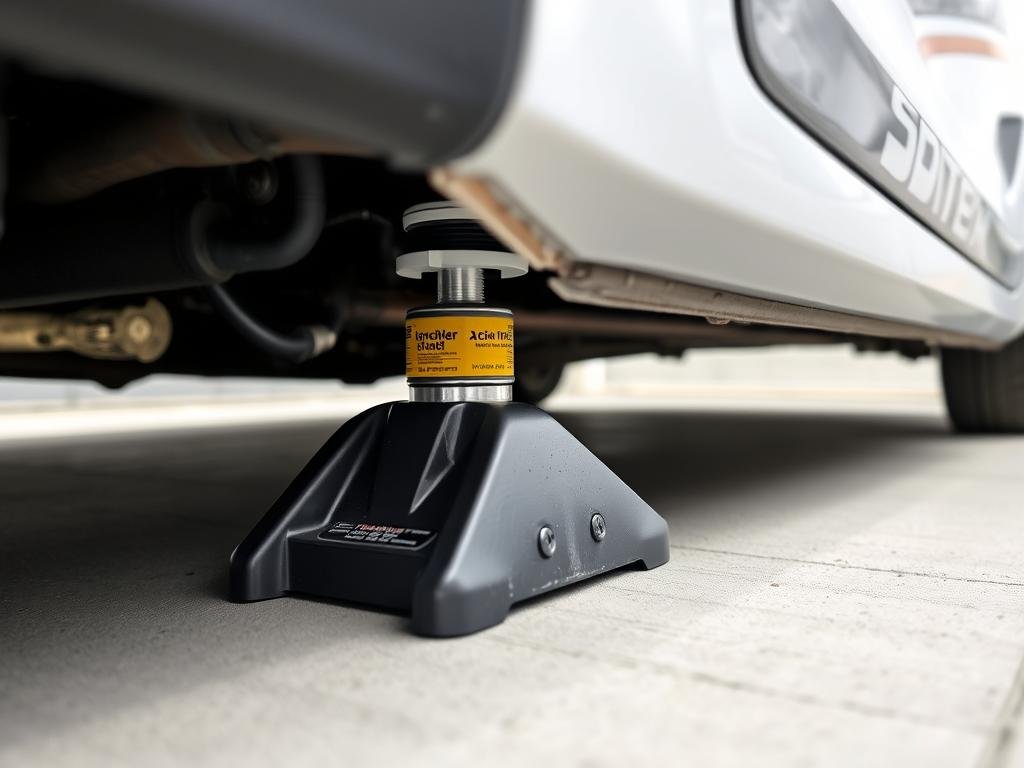
Lift safely by using the correct jack point and a steady base:
- Locate the jacking point near the flat tyre — check your owner’s manual for exact location.
- Position the jack securely under the jacking point and, on soft ground, place a small piece of wood under the jack for stability.
- Raise the vehicle slowly until the flat tyre is high enough to clear the ground (approx. 6 inches / 15 cm).
- Make sure the car is stable before moving on — never put any part of your body under the vehicle supported only by a jack.
Warning: The jack is for tyre changes only. If the jack feels unstable, lower the car and reposition it or call a roadside service.
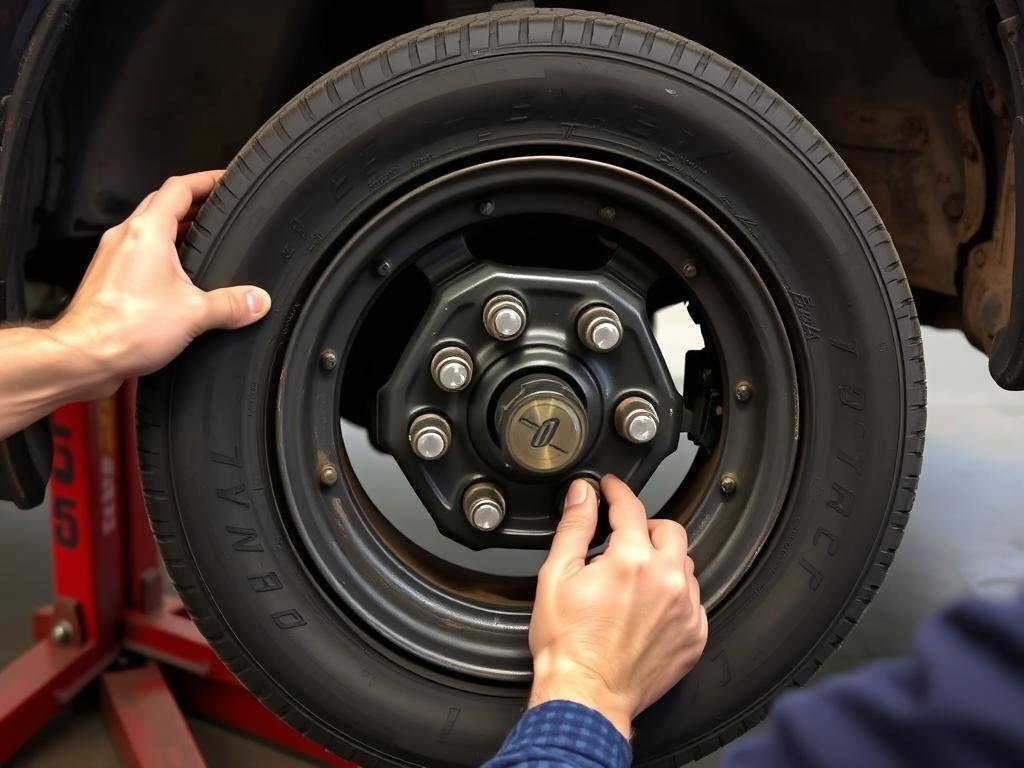
Step 4: Remove the Flat Tyre (≈2–4 minutes)
- Finish unscrewing the wheel nuts by hand and keep them in a safe place.
- Grip the tyre with both hands and pull it straight toward you — avoid twisting.
- Lay the flat tyre flat on the ground or stand it to one side to avoid rolling into traffic.
Step 5: Mount the Spare Tyre (≈3–6 minutes)
- Align the spare tyre’s holes with the wheel studs and push it fully onto the hub.
- Thread the wheel nuts on by hand and tighten them as far as you can by hand.
- Make sure the tyre sits flush against the hub before lowering the vehicle.
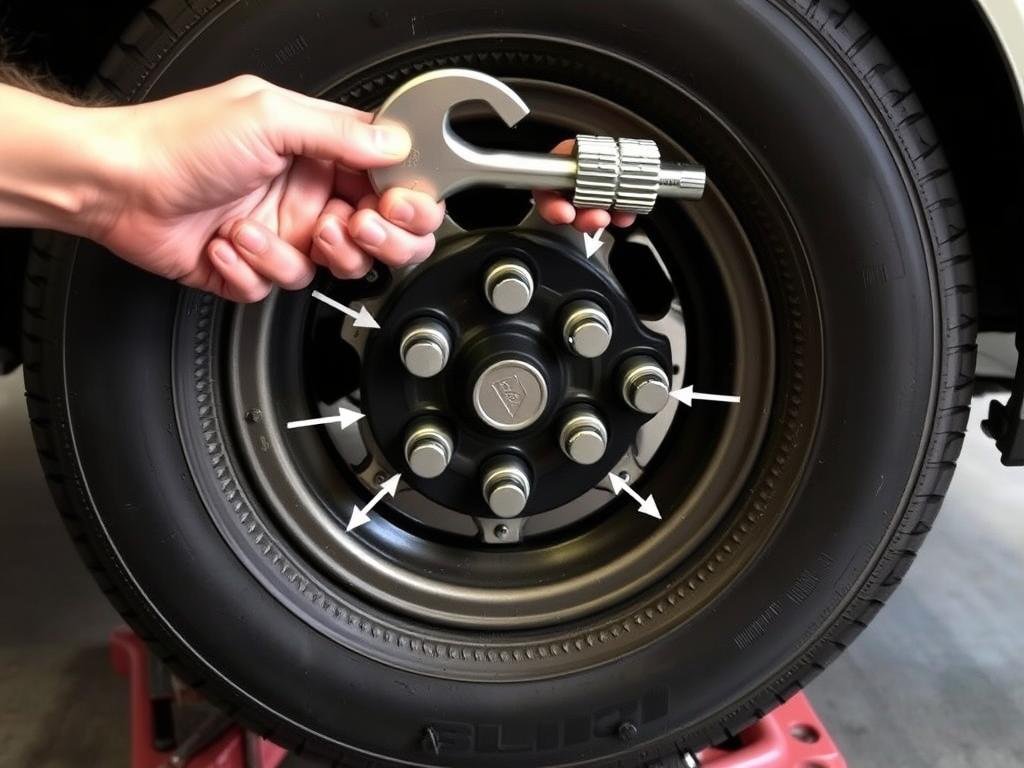
Step 6: Lower the Vehicle and Tighten the Nuts (≈3–6 minutes)
- Lower the vehicle until the spare tyre touches the ground but the car is not fully resting on it.
- Tighten the wheel nuts in a star (criss-cross) pattern to ensure even clamping — use the lug wrench firmly.
- Completely lower the vehicle, remove the jack, then give each nut a final tightening.
Important: For correct torque values, consult your owner’s manual or have a professional check them at a tyre service. Never rely on hand-tightening alone.
Step 7: Final Checks Before Driving (≈2–3 minutes)
- Check the spare tyre pressure with a gauge as soon as possible.
- Stow the flat tyre and tools securely in your boot.
- Remove wheel chocks and warning triangle.
- Drive cautiously — if the spare is a space-saver, follow its speed limit and replace it with a full-size tyre quickly.
Temporary Spare Limitations: Space-saver spares are usually limited to around 50 mph (80 km/h) and intended only for short distances; check the spare’s sidewall and your owner’s manual for exact limits and replace it with a full-size tyre at the earliest opportunity.
Need help or prefer a professional? Find a local tyre service to inspect wheel nut torque and assess whether your damaged tyre can be repaired.
Common Challenges When Changing a Tyre
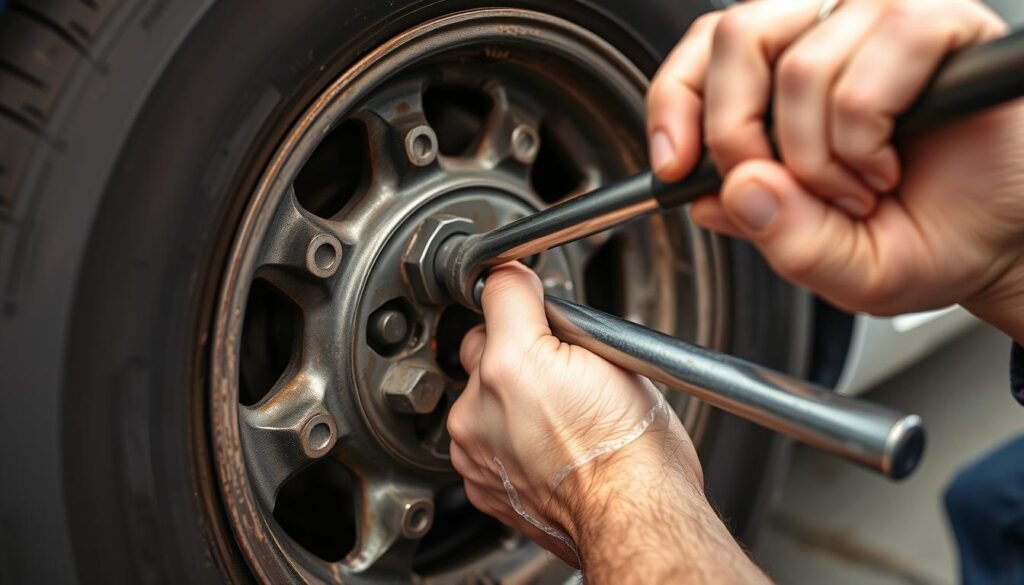
Stuck or Rusted Wheel Nuts
Over-tightened or corroded wheel nuts are one of the most common blockers. Try these safer, practical fixes:
- Apply penetrating oil to the nut and wait 5–10 minutes to let it soak in.
- Use a longer wrench or slip a metal pipe over the wrench handle for more leverage — apply steady, controlled pressure rather than sudden jerks.
- Tap the nut lightly with a hammer to help break surface corrosion before turning.
- Only as a true last resort, and with caution, you can use body weight on the wrench — keep feet stable and hold the car for balance.
Jack Stability Issues
An unstable jack is dangerous. Follow these checks to stay safe:
- Always place the jack on a solid, level surface; never on soft ground without a stable base.
- Put a piece of wood under the jack on gravel or soft surfaces to spread the load.
- Align the jack exactly with the manufacturer’s jacking point before lifting.
- Raise the car slowly and stop if the jack leans — lower and reposition, or call roadside assistance if it remains unstable.
- Never let anyone get under the car when supported only by the jack.
Wheel Stuck to the Hub
Corrosion can bond the wheel to the hub. Use gentle methods first:
- Leave the nuts slightly threaded, lower the car so the wheel sits on the ground with some weight, then rock the wheel by hand to free it.
- Tap the inner edge of the tyre with a rubber mallet or hammer (use a block of wood to protect the rim) to break the rust seal.
- Apply penetrating oil around the hub and wait; repeat tapping if needed.
- Avoid the risky option of driving forward with nuts loose unless you fully understand the hazards — this should only be done on level ground with someone inside to steer and all safety precautions observed.
Limited Visibility
Night or bad weather makes every step harder. Follow this quick checklist for safer visibility:
- Use a hands-free headlamp or a flashlight placed to illuminate your work area.
- Move to a well-lit area if safely possible.
- Keep spare batteries and carry a reflective vest so passing drivers can see you.
- If you feel exposed on a high-speed road at night, call roadside service rather than attempting a change.
When to Call Professionals
If any of these red flags appear, contact a tyre service or roadside assistance:
- You cannot loosen wheel nuts after reasonable effort.
- The jack wobbles or the car feels unstable on the jack.
- You are in an unsafe location (busy highway, poor visibility, or unable to move to a safe spot).
What to Do After Changing Your Tyre

Once you’ve fitted the spare, take these quick, practical steps to stay safe and prevent further issues.
Immediate Actions
- Check the spare tyre pressure as soon as you can with a tyre pressure gauge — many spares are underinflated after long storage.
- Drive cautiously and avoid hard braking or high-speed maneuvers, especially if the spare is a space-saver.
- Listen for unusual noises or vibration that might indicate loose wheel nuts or an improperly seated tyre.
- Re-check the wheel nuts’ tightness after about 10–30 miles (≈16–48 km) of driving — this shorter range is safer for most cars; consult your owner’s manual for specific guidance.
Professional Follow-Up
A temporary spare is only a short-term fix. Arrange professional checks as soon as possible:
- Have a tyre technician inspect the damaged tyre to see if it can be repaired safely.
- If the tyre is beyond repair, replace it with a new tyre that matches your vehicle’s specifications.
- Ask a professional at a tyre service to check and torque your wheel nuts to the manufacturer’s specification using a torque wrench.
- Consider a full tyre inspection (pressure, tread, balance, and alignment) while you’re at the shop to prevent future problems.
Need Quality Tyres or a Quick Check?
If you want professional help replacing or inspecting tyres, contact a trusted tyre service or your vehicle dealer. For convenient online options, Siddhi Tyre offers a range of tyres and expert support.
If you prefer roadside assistance, contact your insurance or local roadside service for help — never delay professional help if you feel uncertain about the repair.
Preventive Tyre Maintenance
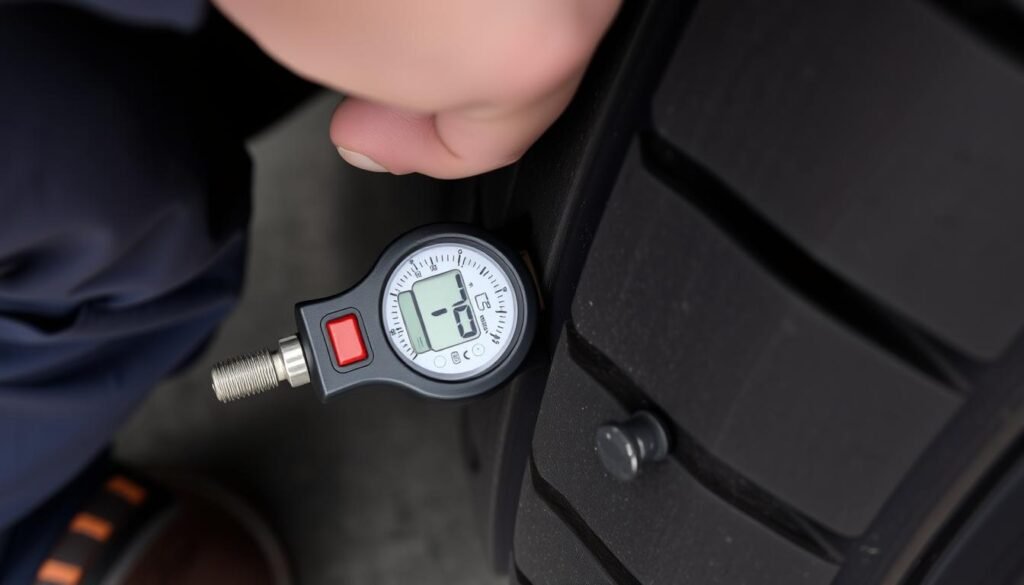
Preventing a flat tyre is easier than fixing one. Simple, regular checks and proper care keep your car safer and reduce the chance of roadside emergencies.
Regular Inspections
- Check tyre pressure monthly and before long trips — use the pressure value from your owner’s manual or the sticker on the driver’s door jamb.
- Inspect tyres for cuts, bulges, or embedded objects each month and after driving over debris.
- Look for uneven wear patterns that could indicate alignment or suspension issues.
- Check tread depth with a gauge — the U.S. guideline is 2/32 inch (≈1.6 mm) minimum; replace tyres that reach or fall below this depth.
Proper Tyre Care
- Maintain the manufacturer’s recommended tyre pressure — underinflation increases wear and puncture risk.
- Rotate tyres according to your vehicle’s recommended schedule to promote even wear.
- Balance tyres when you notice vibration to prevent uneven wear and steering issues.
- Align wheels if the car pulls to one side to preserve tyre life and improve safety.
- Replace tyres that reach the minimum tread depth or show sidewall damage; consider age too — inspect spares and older tyres for cracking.
How to check tread quickly (U.S. friendly): Use a tread-depth gauge or the penny test — insert a penny into the tread with Lincoln’s head down; if you can see the top of Lincoln’s head, the tread is too shallow and the tyre should be replaced.
Make a short monthly checklist you can follow: pressure, visual inspection, tread depth, and spare check. Keep a small tyre kit in your boot that includes a gauge, flashlight, gloves, and a reflective vest so you can act quickly if needed.
Quality tyres from reputable suppliers like those available at Siddhi Tyre are less prone to punctures and often last longer — if you’re unsure, ask a local tyre service to inspect your tyres and recommend replacements based on wear and age.
Frequently Asked Questions About Changing Tyres
How long does it take to change a tyre?
With practice, changing a tyre usually takes 15–30 minutes. Beginners may need up to 45 minutes. Work carefully rather than rushing — safety first.
Can I drive on a flat tyre to reach a safer location?
Only if absolutely necessary for safety. In the U.S. context, move at walking speed (under 5–10 mph / 8–16 km/h) and only a very short distance to reach a safe spot — avoid long runs on a flat because the rim can be damaged. When in doubt, call roadside assistance.
How far can I drive on a temporary spare tyre?
Temporary “space-saver” spares are for short-term use only. Typical limits are around 50 mph (≈80 km/h) and within a short distance to a repair shop (commonly under 50–80 miles / 80–130 km). Always check the spare tyre sidewall and your owner’s manual for exact speed and distance limits.
What if I don’t have a spare tyre?
Many modern cars include tyre repair kits with sealant and a compressor. Follow the kit instructions carefully for a temporary fix. For serious damage or if the kit can’t seal the puncture, call roadside assistance or a local tyre service.
How do I know if my spare tyre is in good condition?
Check the spare’s pressure monthly and inspect for cracks, bulges, or other damage. Even unused spares age over time — many experts recommend replacing tyres (including spares) every 6–10 years depending on storage and condition. When uncertain, have a tyre service inspect it.
Conclusion: Be Prepared for Tyre Emergencies

Practice the steps in a safe place so you’re ready if a flat happens — a little preparation saves time, money, and stress. Keep your car’s spare tyre and tools in good condition and check them monthly.
Two quick actions to take now: 1) Run a monthly tyre-kit check (pressure, lug wrench, jack, flashlight); 2) Schedule a professional tyre inspection if you’re unsure about damage or tyre age. For replacement tyres or expert help, contact a local tyre service or visit Siddhi Tyre.
Expert Tyre Solutions at Siddhi Tyre
For all your tyre needs – from new tyres to professional installation and maintenance advice – trust the experts at Siddhi Tyre. We offer premium quality tyres at competitive prices with excellent customer service.