The Ultimate Guide to the Air Alert Tyre Valve Cap: An Expert’s Review
If you have been driving for as long as I have—over 20 years in the tyre industry—you know that tyre pressure is the secret to a smooth, safe, and cost-effective ride. It dictates how your car handles, how much fuel it consumes, and how quickly your tyres wear out. But let’s be brutally honest: how often do you actually pull out a pressure gauge, kneel in the dirt, and check your tyres?
For most drivers, the answer is “only when they look flat.” And by then, the damage is already done.
That is exactly why the air alert tyre valve cap has become a breakout trend in modern automotive care. These tiny, inexpensive accessories act as a continuous, visual tyre pressure monitoring system right on your wheels.
But do they really work, are they safe for your valves, and should you put them on your vehicle? Let’s break it down in this comprehensive expert guide.
🟢🟡🔴 How Does an Air Alert Tyre Valve Cap Work?
An air alert tyre valve cap (also known as a visual pressure indicator cap) replaces your standard black plastic dust cap. Inside these ingenious little caps is a tiny, highly calibrated mechanical spring and pressure gauge.
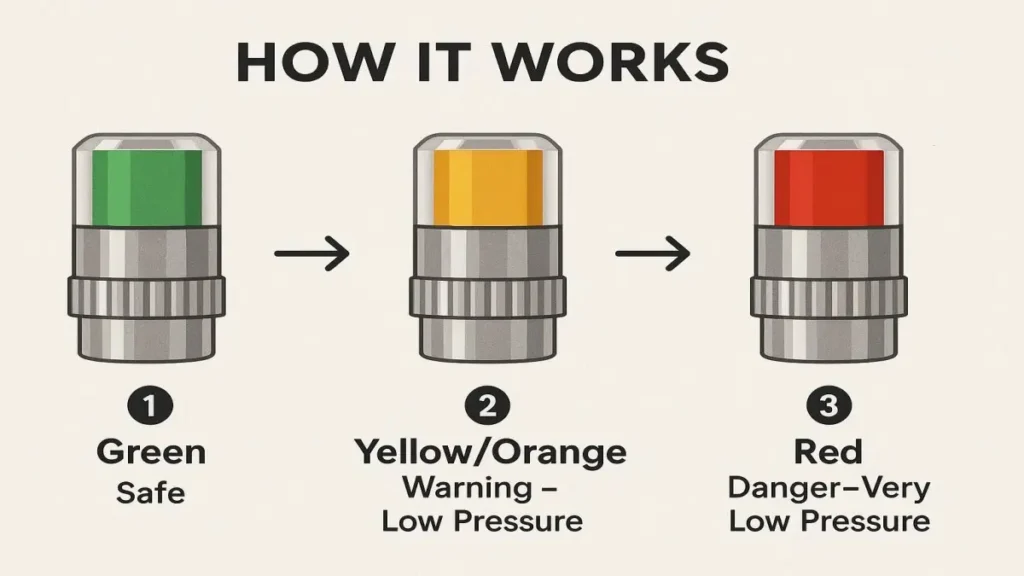
Instead of giving you a confusing numbered reading, they use a simple, universally understood color-coding system to alert you of air loss the second you walk up to your car:
Green (Safe): Your tyre pressure is at the correct, optimal level. The pressure is pushing the spring all the way up. You are good to go!
Yellow/Orange (Caution): Your tyre pressure has dropped by about 10% to 15%. The spring is losing tension. It is time to visit a filling station soon, as your handling and fuel economy are starting to suffer.
Red (Danger): Your tyre pressure has dropped by 25% or more. Stop driving immediately. Driving on a red indicator risks a high-speed blowout, bent rims, or permanent sidewall damage.
Expert Tip:Always buy caps that are perfectly calibrated to your car’s specific recommended PSI (e.g., 32 PSI, 34 PSI, or 36 PSI). Do not guess! Check the inside of your driver’s side door panel or your owner’s manual for your vehicle’s correct pressure rating.
Green means go, yellow means caution, and red means stop and inflate!
📈 The Top 5 Benefits of Using Pressure Indicator Caps
Adding an air alert tyre valve cap to your wheels isn’t just a gimmick; it brings tangible, daily benefits to your driving experience:
Saves Time & Eliminates Guesswork: No more bending down with a manual gauge every weekend. A quick 10-second walk around your car before your morning commute tells you everything you need to know.
Dramatically Improves Fuel Efficiency: Driving on under-inflated tyres increases “rolling resistance,” which forces your engine to burn more fuel to keep the car moving. Keeping tyres perfectly inflated can improve your fuel economy by up to 3%, saving you money at the pump.
Extends the Life of Your Tyres: Low pressure causes uneven wear on the outside shoulders of your tyres. Catching pressure drops early saves you from having to buy new tyres prematurely. “Buy Tyres“, “Tyre Brands“, or “Tyre Lifespan”
Enhances Road Safety & Braking: Hydroplaning in the rain and sudden blowouts on the highway are heavily linked to under-inflated tyres. These caps give you an early warning system before disaster strikes. national tyre safety standards
Eco-Friendly Driving: Better fuel economy means a lower carbon footprint. Plus, making your tyres last longer keeps rubber out of landfills for a longer period.
⚙️ Material Matters: Plastic vs. Brass vs. Aluminum
As a tyre expert, one of the most common mistakes I see is people buying the wrong type of air alert tyre valve cap. The material you choose matters for the health of your valve stem.
Plastic/Polymer Caps: These are cheap and effective. They won’t rust or fuse to your valve stem, making them a safe choice for standard rubber valves.
Brass/Stainless Steel Caps: These are durable and high-quality. They are excellent if you have metal valve stems or rubber stems with brass threads.
Aluminum Caps:Warning! If your car has standard brass-threaded valve stems, screwing an aluminum cap onto it can cause “galvanic corrosion” (especially in salty or coastal environments). The two different metals react, and the cap can permanently fuse to the valve stem, requiring a mechanic to cut it off.
🛑 Common Myths Busted
Myth 1: They replace my car’s electronic TPMS. * Fact: No. Your car’s internal Tyre Pressure Monitoring System (TPMS) alerts you via the dashboard. These caps are an external visual backup that helps you catch slow leaks before the dashboard light even turns on.
Myth 2: They leak air out of the tyre. * Fact: High-quality air alert caps have an internal O-ring seal. As long as they are screwed on securely, they will not leak air.
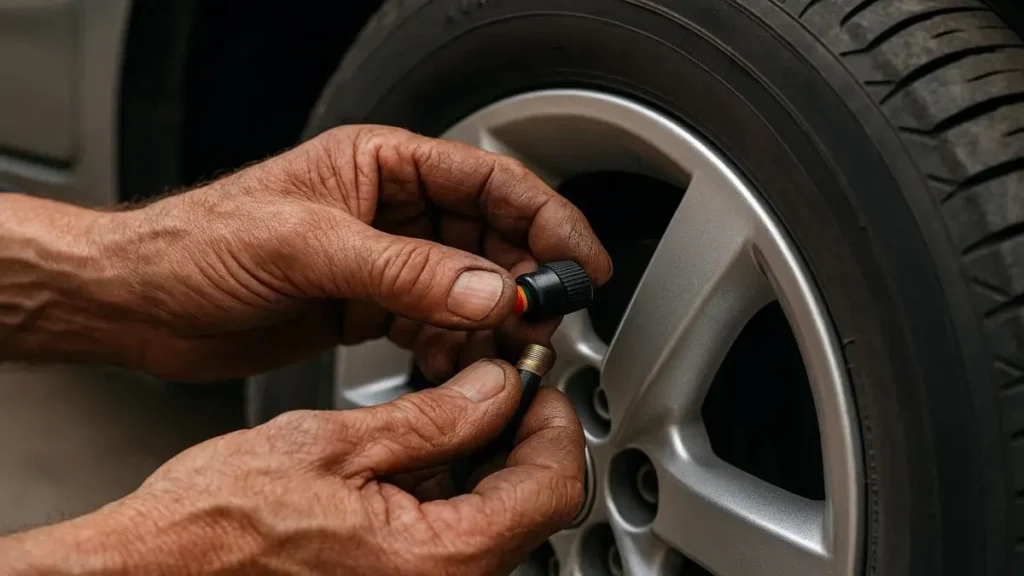
Installation is as easy as replacing your standard dust caps
🛠️ How to Install and Maintain Your Caps (The Mechanic’s Way)
Installation takes less than two minutes, but here is how to do it like a pro to ensure they last for years:
Remove: Unscrew your current plastic or metal dust caps.
Clean: Wipe the valve stem threads with a clean, dry cloth to remove dirt and road grime.
Lubricate (Expert Secret): Apply a tiny, pin-drop amount of anti-seize grease or a dab of Vaseline to the threads. This guarantees the cap will never rust or get stuck to the valve stem!
Install: Screw the new air alert tyre valve cap onto the stem securely by hand. Do not over-tighten, and never use pliers.
Verify: Check the clear window to ensure the green indicator is showing brightly.
🏁 Final Verdict: Are They Worth It?
Absolutely. For a very small investment, an air alert tyre valve cap provides massive peace of mind, protects your expensive tyres, and keeps your family safe on the road. It is a brilliant, low-tech solution to a very common driving problem.
However, remember my golden rule: Air alert valve caps are fantastic for daily visual checks, but they do not replace a high-quality digital pressure gauge. Use the caps for your daily peace of mind, but use a proper gauge once a month to confirm your exact PSI.NHTSA or a road safety authority regarding tyre pressure standards
If you notice your caps constantly showing yellow or red, and your tyres keep losing air despite refilling them, it might be time for a professional puncture check or a tyre replacement.
Need expert tyre advice, a safety check-up, or a new set of premium wheels? Visit us at siddhityre.com for all your tyre maintenance needs. Drive safe, and keep those indicators green!